

Visiting Orlando during hurricane season doesn’t automatically mean canceling your plans, but weather can disrupt a trip. The Atlantic hurricane season runs from June 1 through November 30, and it typically peaks from mid-August to mid-October. September is often the wettest stretch, so flexible plans matter most then.
It’s reasonable to wonder whether a storm could affect park days, travel, or your budget when visiting Orlando during hurricane season. This period can also bring potential benefits, such as lower rates and lighter crowds. Here’s when hurricane activity typically peaks, what weather disruptions to plan for, and how seasonal conditions may affect your trip, so you can weigh the trade-offs and plan with flexibility.
Key Takeaways
- Build flexibility into your itinerary so a weather interruption doesn’t derail the whole trip.
- Pack for sudden rain and changing conditions, and keep essentials easy to reach.
- Weigh possible savings and smaller crowds against the chance of schedule changes.
- Plan indoor alternatives and decide which activities can shift to another day.
1. What months are considered hurricane season?
The Atlantic hurricane season runs from June 1 through November 30. Orlando can experience tropical weather during this period, although September, October, and November are commonly associated with hurricanes in the area. Summer visits also bring a familiar weather consideration: afternoon thunderstorms are a regular pattern.
Orlando’s average temperatures from September through November range from the high 50s to the high 80s °F. Rainfall can vary during hurricane season, so be prepared for wet weather. Plan flexible outdoor activities and keep an indoor alternative ready for a rainy day.
Storm alerts use specific timing. According to the National Hurricane Center, a hurricane watch is typically issued 48 hours before expected tropical-storm-force winds. The National Hurricane Center lists Category 5 (major) hurricane winds as 157 mph or higher, 137 kt or higher, or 252 km/h or higher. Follow official updates as conditions develop.
There’s no fixed schedule for Orlando theme park closures during hurricanes. Closures depend on the storm and each park’s operating decisions, so the season alone can’t predict whether attractions will close. Leave room in your itinerary to shift park days or switch to indoor plans if weather disrupts your visit.
For travel from September through November, refundable flights and hotel bookings can offer more flexibility. Before booking, read each provider’s hurricane communications, planned actions, and refund policies. Travel insurance is another option to evaluate: review its covered reasons, exclusions, and claim requirements before purchasing, and don’t assume every storm-related change qualifies. Keep reservation details and policy documents accessible so you can find the relevant terms quickly if plans change.
2. Atlantic hurricane season dates and peak
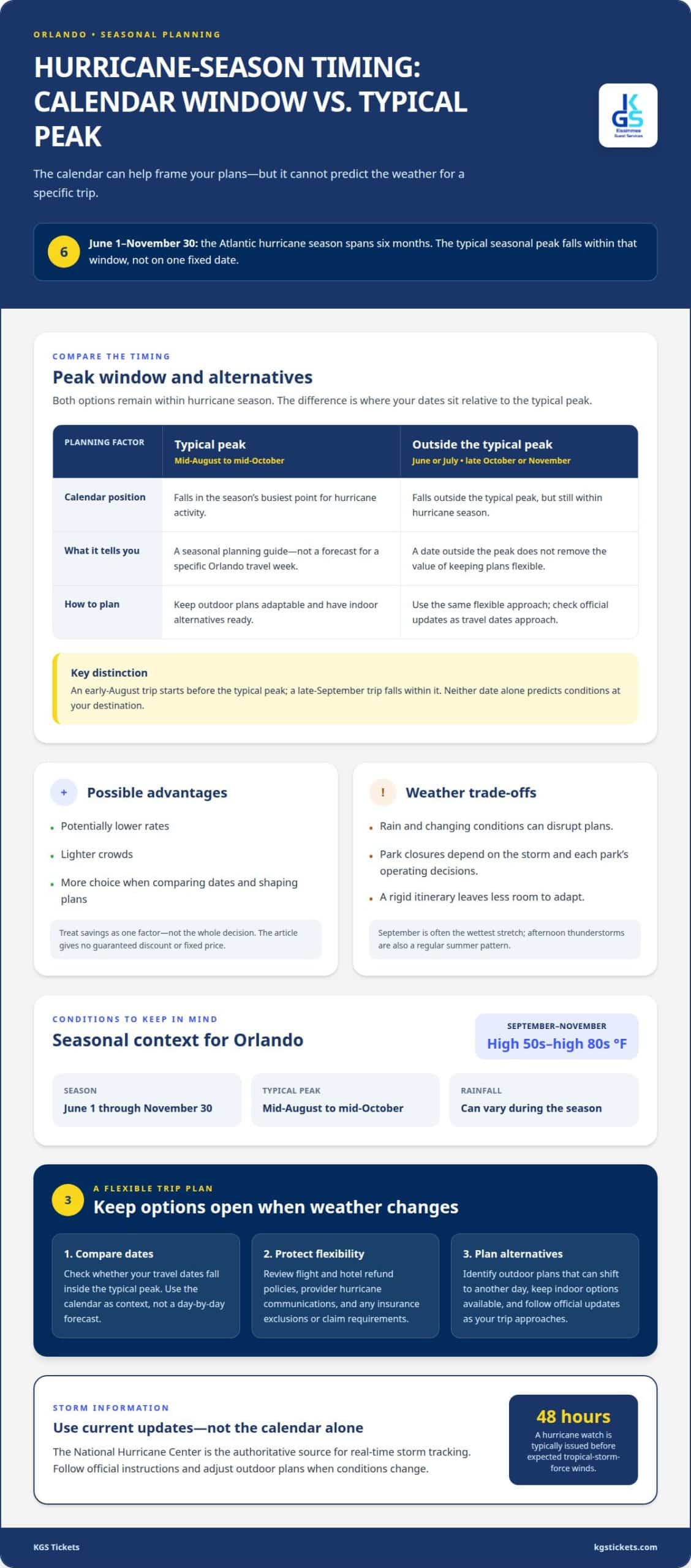
The Atlantic hurricane season spans June 1 through November 30, a six-month calendar window. Its busiest point typically falls from mid-August to mid-October, rather than on one fixed date. This period marks the seasonal peak, not a prediction for a particular Orlando travel week.
If you’d rather travel outside the typical peak, consider June or July, or late October and November. These dates fall outside the mid-August to mid-October peak window but remain within hurricane season. No date during the season removes the value of keeping your plans flexible.
Use the peak window as a planning guide, not a day-by-day forecast. A trip in early August, for example, starts before the typical peak, while a late September visit falls within it. This distinction can help you weigh timing, while keeping in mind that weather varies from one travel date to another.
To use the calendar, first compare your travel dates with the peak window. Then identify plans that depend most on clear weather, such as a full day of outdoor activities. Keep indoor alternatives available and leave room to rearrange activities if forecasts change.
The National Hurricane Center is the authoritative source for real-time storm tracking. Follow its updates as your travel dates approach, then use current conditions to guide your daily plans. If the forecast changes during your stay, prioritize official instructions and adjust outdoor activities rather than relying on the seasonal calendar alone.
A hurricane in the North Atlantic has sustained winds of at least 74 miles per hour, according to the National Hurricane Center. That threshold describes storm strength; it does not by itself indicate what conditions will be at a specific destination or during a particular trip.
3. Packing for weather-related disruptions
Pack for Orlando’s warm, humid days and sudden rain. Add a lightweight rain jacket or poncho, quick-drying clothes, and spare socks to your day bag. Comfortable shoes that can handle wet pavement make walking between indoor attractions easier in the rain. A compact umbrella can help between destinations, but stow it during rides or crowded indoor visits.
Protect essentials from water before leaving your room. Put your phone, wallet, travel documents, and reservation details in a sealed pouch or resealable bag. Keep a portable charger and cable together so you can recharge your phone if a long day changes plans. Save important booking details offline too, in case you can’t access them online.
- For changing weather: Pack a poncho, spare socks, and a lightweight change of clothes.
- For personal needs: Bring prescription medication, basic toiletries, and any required medical supplies.
- For travel documents: Keep identification, insurance details, and booking information protected from rain.
- For a delayed day: Add a small snack, water bottle, and phone charger to your day bag.
Keep medication and essential documents in your carry-on, not checked luggage. If a flight delay separates you from your suitcase, those items will still be accessible. Pack familiar essentials for children, such as a change of clothes or a favorite small activity, to make an unexpected wait easier.
Check the day’s forecast before heading out and adjust what you pack. A rain jacket and spare socks may be enough for a passing shower; persistent rain calls for dry clothes and more indoor plans. Keep wet items in a reusable bag to protect clean clothes and electronics on the way back.
4. Lower rates and lighter crowds during hurricane season
Lower rates and lighter crowds can make an Orlando trip during hurricane season appealing. Seasonal demand may ease, giving travelers more choice when comparing dates and shaping plans. Treat potential savings as one factor, not the whole decision. A quieter visit is less valuable if a rigid itinerary leaves no room to adapt to changing weather.
Start by comparing your preferred dates with nearby alternatives. Consider the full trip plan, including travel dates, park visits, and scheduled evening activities. Flexible dates can help you find better value without relying on a particular discount or assumed price. Keep your must-do experiences in the plan and leave less essential activities open to rearrangement.
Lighter crowds can change the feel of a day at Orlando attractions. Shorter waits may leave more time for a meal, a show, or a break between activities. Crowd levels vary by date and attraction, so don’t assume every park will be quiet. Check operating information as your visit approaches, and have indoor alternatives ready if rain affects outdoor plans.
Balance possible savings against the flexibility your trip needs. If a lower-cost date also conflicts with a busy personal schedule, compare the trade-offs carefully. A family with fixed school dates, for example, may prioritize refundable travel arrangements, while travelers with open calendars can consider shifting their visit. The right choice depends on which dates, activities, and cancellation terms suit your plans.
Use a simple planning order: choose flexible dates, compare overall trip options, then decide which experiences matter most. Keep a backup activity for each major outdoor day, such as an indoor attraction or dinner show. That way, lighter crowds and seasonal value support the trip without making every plan depend on clear skies. Plan your Orlando itinerary with flexibility in mind.
KGS Tickets: Universal Orlando Resort Tickets
KGS Tickets offers Universal Orlando Resort Tickets to help you arrange attraction plans after weighing your travel dates and weather flexibility. If your itinerary includes other Central Florida stops, consider how those visits fit alongside your Orlando plans.
Choose the experiences you want to prioritize, then keep your schedule adaptable to weather and official park updates. Tickets help organize attraction visits, while storm decisions and travel changes remain separate considerations. For example, you could plan a Universal Orlando Resort visit and an indoor dinner show, leaving room to switch the order if conditions change.
Contact KGS Tickets to discuss ticket options for your Orlando plans.
Shape a trip that can flex
Good planning isn’t about predicting every change. It’s about choosing experiences that matter to you and leaving enough room to rearrange them. That approach makes visiting Orlando during hurricane season easier to weigh against your budget, schedule, and preferred attractions.
KGS Tickets offers Walt Disney World Theme Park Tickets and Universal Orlando Resort Tickets. As you build your attraction plan, consider which parks best fit your group and keep your schedule adaptable.
For help with attraction tickets as you plan your Orlando trip, contact KGS Tickets for trip help. Build a flexible plan, then look forward to the experiences you’re excited to enjoy.
Frequently Asked Questions
Is It Risky to Visit Orlando During Hurricane Season?
Hurricane season can bring disruptions such as heavy rain, changed travel plans, or attraction interruptions. Visiting Orlando during hurricane season isn’t automatically a reason to cancel; the practical question is how much flexibility your plans allow. Keep essential reservations accessible, leave room to rearrange activities, and follow official instructions if a storm affects your location.
What do travelers do if they are in Florida and a hurricane is approaching?
Follow emergency-response officials’ instructions, including evacuation directions for coastal areas. Keep up with National Hurricane Center advisories and messages from your airline, lodging provider, and rental-car company. If an alert affects your itinerary, follow official safety guidance first, then address travel changes with the relevant company. Keep identification, medications, and reservation details together so they’re accessible if plans change.
What is the difference between a tropical storm watch, tropical storm warning, hurricane watch and hurricane warning?
A tropical storm watch means tropical-storm conditions, with winds from 39 to 73 miles per hour, could threaten a specified coastal area within 48 hours. A tropical storm warning means those conditions are expected within 36 hours or less. A hurricane watch is typically issued 48 hours before expected tropical-storm-force winds, according to the National Hurricane Center. A hurricane warning is typically issued 36 hours before those winds.
What months are considered hurricane season?
The Atlantic hurricane season runs from June through November. For trip planning, distinguish the full season from its typical peak, which falls from mid-August to mid-October. September is typically the wettest stretch. These calendar patterns can help you compare travel dates, but they don’t replace current storm advisories as your departure approaches.
Where can I get real-time advisories for hurricanes/tropical storms?
The National Hurricane Center is the authoritative source for real-time storm tracking and advisories. Follow its updates for a storm’s projected path and status rather than relying on an older forecast or a social media post without context. If an advisory affects your trip, also review messages from your airline and other travel providers for reservation changes.
When is hurricane season in Orlando, Florida?
Orlando’s hurricane season follows the Atlantic hurricane season, from June 1 through November 30. The typical peak, from mid-August to mid-October, is a useful planning reference, not a forecast for a specific day. For a trip scheduled during those months, use current advisories as travel dates approach and keep important plans adaptable.