
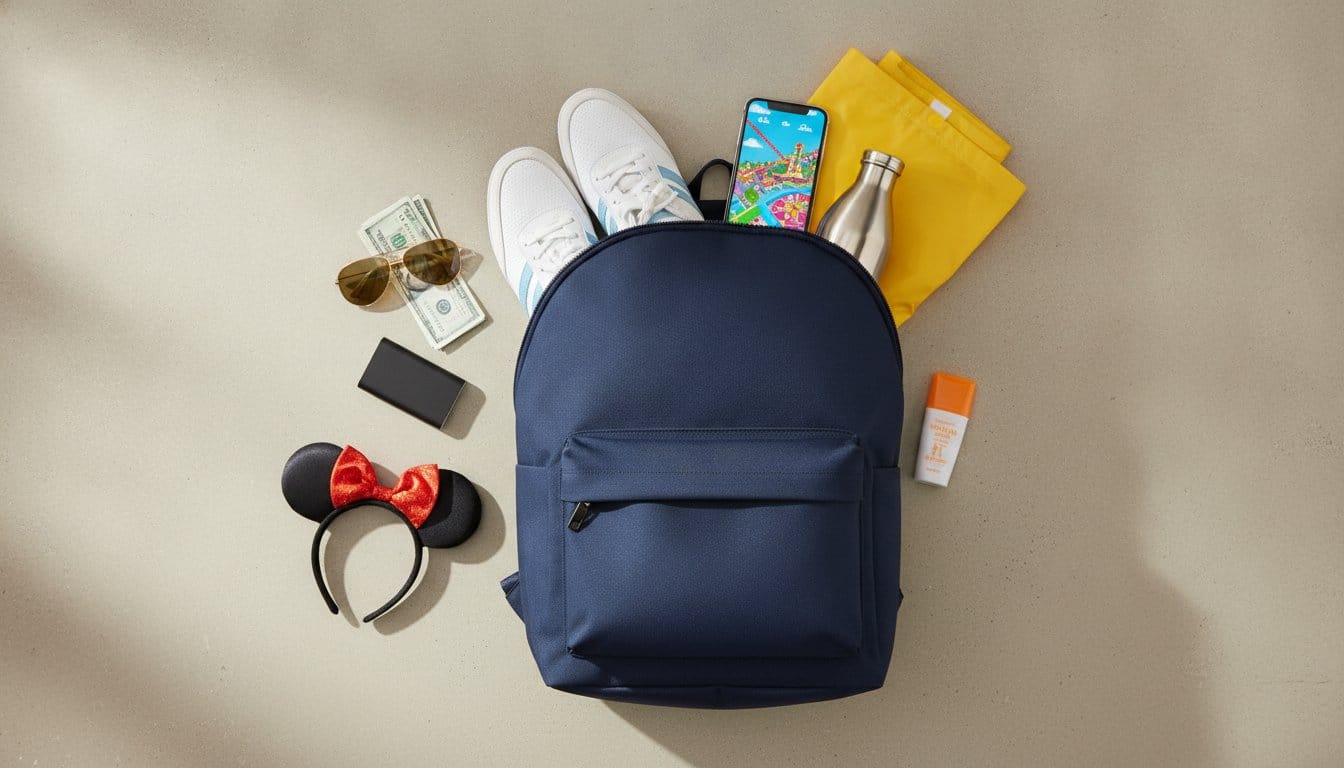
Have you ever spent months planning the perfect getaway, only to have a single blister or a dead phone battery bring the magic to a grinding halt? It’s a scenario we see far too often. You want to be prepared for every Florida afternoon downpour, yet carrying a heavy, overstuffed backpack through 20,000 steps of heat is its own kind of exhaustion. We understand that finding the right balance between being prepared and staying mobile is the secret to a successful trip.
Our team has spent over 25 years helping families navigate these gates, and we’re here to ensure your 2026 vacation is seamless. This guide provides an expert-vetted strategy on what to pack for Orlando theme parks to keep you comfortable, fully charged, and ready for the magic. We’ll show you how to build a modular park bag that handles volatile weather and high-tech app requirements without weighing you down. From the latest stroller size regulations to the essential gear for the opening of Epic Universe, you’re about to master the art of the stress-free park day.
Key Takeaways
- Learn the “Footwear Rule” to prevent blisters and manage 20,000 steps a day by rotating specific types of broken-in athletic shoes.
- Discover exactly what to pack for Orlando theme parks to keep your devices charged and your mobile apps ready for the new 2026 digital park features.
- Master the “Indoor-Outdoor” temperature gap and learn why a reusable poncho is your best defense against Florida’s unpredictable afternoon storms.
- Avoid delays at security by understanding the latest 2026 prohibited items list, including specific stroller dimensions and banned “stroller wagons.”
- Prepare for everything from the splash zones at Volcano Bay to the dress codes of Orlando’s premier dinner shows with our modular packing strategy.
The Essential Seven: Non-Negotiables for Every Park Day
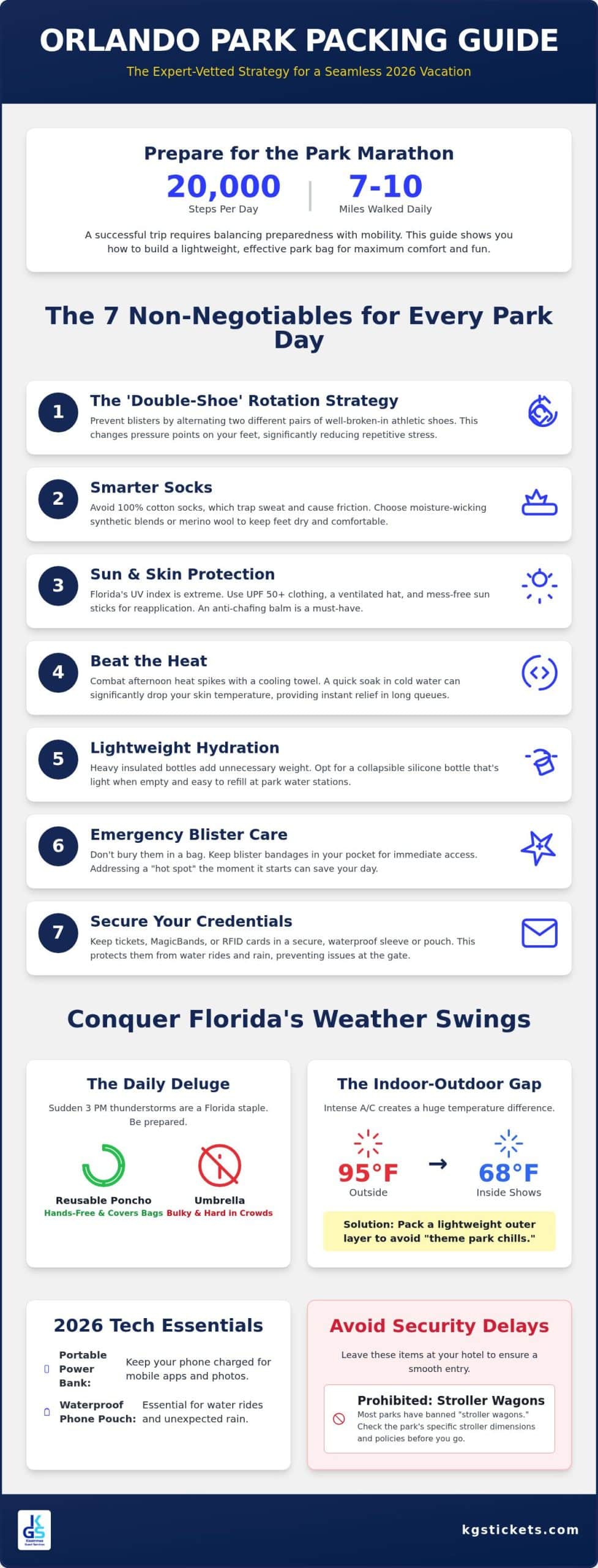
When deciding what to pack for Orlando theme parks, you need to think like an endurance athlete. You’ll likely walk between seven and ten miles every single day. This level of activity is similar to what you might encounter on Algarve cultural tours, where exploring natural parks on foot requires the same focus on physical preparation. Success starts with a foundation of items that prioritize your physical well-being. If your feet fail or your skin burns, the most expensive ticket in the world won’t save the day. We’ve narrowed down the absolute essentials that every veteran traveler keeps in their kit.
The ‘Double-Shoe’ Rotation Strategy
Don’t make the mistake of bringing only one pair of sneakers. Even the most comfortable shoes can cause “hot spots” when worn for twelve hours straight. By alternating two different pairs of broken-in athletic shoes, you change the pressure points on your feet. This rotation significantly reduces the risk of repetitive stress blisters. It’s a simple trick that local experts use to stay mobile for a full week of thrills.
Your socks are just as vital as the shoes themselves. Avoid 100% cotton at all costs. Cotton absorbs sweat and creates friction, which is a recipe for disaster in the Florida humidity. Instead, choose moisture-wicking synthetic blends or merino wool. For an extra layer of protection, keep emergency blister bandages in your pocket. Having them on your person rather than buried in a bag means you can address a sting the moment it starts.
Sun and Skin Safety Essentials
Florida’s UV index is notoriously high, often reaching extreme levels by mid-morning. Basic SPF is a start, but Sun Protection 2.0 involves wearing UPF 50+ clothing. These lightweight, breathable fabrics provide a physical barrier that doesn’t wash away with sweat or water rides. Don’t forget your scalp; a ventilated hat or specific scalp sunscreen spray is essential for those long outdoor queues at various attractions in the Greater Orlando area.
In high humidity, heavy cream sunscreens often feel greasy and can run into your eyes. Many families prefer sun sticks for face reapplication because they’re mess-free and easy to use on the go. To combat afternoon heat spikes, pack a cooling towel. A quick soak in cold water can drop your skin temperature significantly. Finally, always include an anti-chafing balm. It’s the most overlooked item in an Orlando suitcase, yet it’s the difference between a pleasant walk and a painful evening.
Hydration and security round out your non-negotiables. While heavy insulated bottles keep water cold, they add significant weight to your park bag. Consider a collapsible silicone bottle instead. It’s light when empty and easy to refill at filtered stations. Most importantly, keep your authorized Walt Disney World tickets or MagicBands in a secure, waterproof sleeve. Whether you’re using RFID cards or mobile entry, having your credentials organized ensures you spend your time on the rides rather than at the guest relations window.
Seasonal Strategies: Packing for Florida’s Temperamental Weather
Orlando weather doesn’t follow a strict schedule, but it certainly follows a pattern. If you’re wondering what to pack for Orlando theme parks, you must prepare for the “daily deluge” and the surprising “indoor-outdoor” temperature gap. Central Florida is famous for its sudden tropical downpours, especially the legendary 3:00 PM thunderstorm that rolls through from May until October. While many tourists reach for a cheap umbrella, seasoned pros know that a sturdy, reusable poncho is the superior choice. Umbrellas are difficult to navigate through thick crowds and are often restricted on attractions, whereas a poncho keeps both you and your backpack dry while leaving your hands free.
Don’t overlook the intensity of Florida’s air conditioning. It might be 95 degrees on Main Street, but inside a theater show or a long indoor queue, the temperature often hovers around a crisp 68 degrees. This 20-degree swing can lead to “theme park chills” if you’re damp from a water ride or a rain shower. Keeping a lightweight outer layer in your bag is a small price to pay for sustained comfort. For more official guidance on managing the elements, you can review advice on health and safety in Florida to ensure your group stays resilient throughout the trip.
Summer Survival (June – September)
During the peak of summer, humidity is your primary opponent. Pack lightweight, moisture-wicking fabrics that dry in minutes rather than hours. This is especially important after riding splash-heavy attractions like Tiana’s Bayou Adventure or Jurassic Park River Adventure. In 2026, portable neck fans have become a park staple. They are absolutely worth the bag space, providing a consistent breeze during those stagnant moments in outdoor lines. To keep your skin clear and comfortable, look for “dry-touch” sunscreens that won’t feel tacky when the humidity hits 90%.
The ‘Orlando Winter’ Layering Guide
Winter in Orlando is deceptive. You might wake up to a 40-degree morning that requires a fleece, only to find yourself in 80-degree sunshine by lunch. The secret is the “packable” layer. A down vest or a thin fleece can be rolled into a tiny bundle and stowed in a locker once the sun peaks. Always check the local forecast 48 hours before you fly. Florida cold fronts move fast, and you don’t want to be the person buying a $70 emergency sweatshirt because you only packed shorts. Before you head out, make sure you’ve already secured your discounted Orlando tickets so you can head straight to the turnstiles when the gates open.
Finally, never underestimate the power of the humble Ziploc bag. Even the best “waterproof” backpacks can leak during a true Florida tropical storm. Stashing your phone, power bank, and extra socks in a gallon-sized freezer bag provides a foolproof secondary seal. It’s a low-tech solution that saves high-tech gear every single day in the parks.
The 2026 Tech & Park Bag Strategy: Staying Connected
In 2026, your smartphone is no longer just a tool for taking photos; it’s your primary key to the entire resort experience. From mobile food ordering to navigating virtual queues, your device will be under constant strain. This shift makes digital preparation the most critical category when deciding what to pack for Orlando theme parks. If your phone dies by noon, you lose access to your itinerary, your tickets, and your ability to coordinate with your group. Streamlining your tech setup ensures you spend more time enjoying the attractions and less time hunting for a charging kiosk.
Power Management for High-Tech Parks
A 10,000mAh power bank is the absolute minimum requirement for a modern park day. Between high-brightness screens in the intense Florida sun and constant GPS usage for wayfinding, a standard phone battery rarely survives until the evening fireworks. This is particularly true when you are actively managing Universal Orlando tickets or Disney’s Lightning Lane passes through their respective apps. These platforms are resource-heavy and will drain your juice faster than you might expect.
To stretch your battery life even further, utilize the “Airplane Mode” trick. When you enter indoor queues, cellular signals often drop, causing your phone to work overtime searching for a tower. Switching to airplane mode in these dead zones prevents this unnecessary drain. Additionally, ensure you have set up your digital wallet before arrival. Contactless payments are now the standard at almost every merchandise and food location, allowing you to pay with a quick tap of your phone or watch. This level of readiness provides peace of mind and keeps the line moving for everyone.
Choosing the Right Park Bag
The debate between backpacks and smaller bags often comes down to your specific needs for the day. While a full-sized backpack is great for families carrying supplies, it can be a liability at parks like Universal, where many thrill rides require you to store all items in a locker. A small crossbody bag or a high-quality fanny pack is often the most efficient choice. These smaller profiles fit more easily into the free, short-term lockers, saving you the hassle of paying for larger storage units.
Regardless of the bag style you choose, a waterproof liner is a must. You can purchase specialized dry bags or simply use a heavy-duty freezer bag to protect your electronics. This secondary seal is vital for protecting your gear during the afternoon downpours we mentioned in the weather section or when you’re taking a plunge on a water-based attraction. By keeping your bag organized and your tech protected, you stay agile and ready for whatever the day brings.
Specialized Gear: Water Parks, Dinner Shows, and Beyond
While your standard gear handles the major resorts, specific adventures in Central Florida require a more tailored approach. A day at a world-class water park or an evening at a high-energy dinner show involves unique challenges that a general list won’t cover. Understanding these nuances is a key part of knowing what to pack for Orlando theme parks to ensure you aren’t caught off guard or forced into expensive on-site purchases. Our 25 years of local expertise has shown us that the right gear for the right activity is what separates a good trip from a legendary one.
The Water Park Survival List
If you’re heading to Aquatica, Volcano Bay, or Blizzard Beach, your primary concern is the pavement. On a typical 90-degree day, the walkways and sand can become hot enough to cause significant discomfort. Water shoes are a non-negotiable item. Unlike flip-flops, they stay secure on your feet during lazy rivers and are permitted on most tube slides. They provide the grip and protection you need to move between attractions without searching for where you left your sandals at the bottom of a slide.
Protecting your tech is equally vital. While we discussed waterproof liners for standard parks, water parks demand a dedicated waterproof phone pouch with a secure neck lanyard. Look for versions with a reliable seal that allows for touchscreen use through the plastic. Regarding towels, the debate usually comes down to luggage space. Most parks offer rentals, but bringing your own compact microfiber towel saves money and dries much faster than standard cotton versions. This is a simple way to keep your bag light while staying prepared.
Evening and ‘Smart Casual’ Needs
Orlando’s premier dinner shows and upscale dining at Disney Springs often call for a slight step up from “ride-ready” attire. “Theme Park Casual” typically means a clean polo or a sundress paired with the comfortable walking shoes we discussed in section one. You don’t need a tuxedo, but a quick refresh can make your evening feel much more special. If you’ve spent the morning in the humidity, you’ll appreciate having a “refresh kit” waiting in your vehicle. Stashing a clean shirt, deodorant, and a fresh pair of socks in your car can give you the second wind needed for a long night of entertainment.
For those venturing out to the Kennedy Space Center or an airboat tour, remember that these environments are often more exposed to the elements. Coastal winds at Cape Canaveral can make it feel cooler than the inland parks, while airboat tours require extra bug spray and polarized sunglasses to spot local wildlife. Preparing for these specific scenarios ensures your vacation remains a series of highlights rather than a collection of minor inconveniences. To finalize your itinerary and secure your spot at the city’s top attractions, buy your Orlando dinner show tickets and park passes through our authorized secure platform.
Prohibited Items: What to Leave at Your Hotel
Success at the gates isn’t just about what you bring; it’s about what you leave behind. Security protocols at major resorts have become highly sophisticated in 2026. Knowing what to pack for Orlando theme parks includes understanding the strict list of prohibited items that will cause delays or even result in you being turned away at the turnstiles. Our goal is to get you through the scanners and into the magic as quickly as possible, avoiding the frustration of a long manual bag search.
Navigating Park Security
Most major Orlando parks now use Evolv security scanners. These advanced systems allow you to walk through without removing items from your bag. However, certain objects frequently trigger a “red alert” for manual inspection. Large metal umbrellas, heavy camera equipment, and certain metal water bottles are the most common culprits. To speed through, pack your bag in a way that allows a security officer to easily see the contents if a search is required. Use clear pouches for smaller items rather than burying them in deep pockets.
One rule that catches many travelers off guard is the ban on loose or dry ice. If you’re bringing a cooler, it must be soft-sided and meet specific size requirements. At Disney, the limit is 24″ long x 15″ wide x 18″ high. Universal is even stricter, requiring soft-sided coolers to be smaller than 8.5″ wide x 6″ high x 6″ deep. Instead of loose ice, which can leak and hide prohibited items, use reusable gel packs. Glass containers are also strictly forbidden, with the exception of small baby food jars. If you’re packing snacks, transfer everything into plastic containers or silicone bags before you leave your room.
Stroller and Mobility Guidelines
For families with young children, stroller dimensions are a critical detail. In 2026, both Disney and Universal enforce a strict limit: strollers must be no larger than 31″ wide and 52″ long. It’s essential to measure your gear before you depart. Perhaps the most important rule to remember is that wagons of any kind are prohibited. This includes “stroller wagons,” regardless of how expensive or popular they are. These items are often stopped at the security checkpoints, forcing families to return them to their vehicles or rent a park-approved stroller at the entrance.
Technology also has its limits. Drones and selfie sticks are banned across all major properties for safety and guest experience reasons. If you attempt to bring a handheld extension pole for your camera, security will ask you to leave it behind. For those coordinating large school, church, or family outings, managing these logistics can be complex. Contact us for group discount packages to simplify your planning and ensure every member of your party is prepared for a smooth entry. By following these established guidelines, you ensure your day starts with excitement rather than a trip back to the parking lot.
Ready for Your Best Orlando Vacation Yet?
Mastering what to pack for Orlando theme parks is the final step in ensuring your 2026 trip is as magical as you’ve imagined. By prioritizing the “Double-Shoe” rotation to save your feet and keeping a high-capacity power bank ready for those app-heavy days, you’ve already bypassed the most common vacation pitfalls. You now know exactly how to navigate security with ease and which specialized gear will keep you comfortable from the first rope drop to the final firework show.
Now that your bags are almost ready, it’s time to secure the most important part of your trip. Since 1997, we’ve served as trusted local experts for millions of visitors. We provide genuine peace of mind as an authorized reseller for all major parks, and we never require timeshare presentations or hidden fees. Secure your discounted 2026 Orlando theme park tickets today!
We can’t wait to see you in the parks. Your adventure is just a few clicks away, and we’re honored to be a part of your vacation planning journey.
Frequently Asked Questions
Can I bring my own food and snacks into Orlando theme parks?
Yes, you can bring outside food and non-alcoholic beverages into most major parks. Just make sure you avoid glass containers and loose ice, as these are strictly prohibited for safety reasons. Packing your own snacks in reusable silicone bags is a smart way to manage your budget while keeping your energy up between meals.
What is the best type of bag to carry for a full day at Universal or Disney?
A small, lightweight backpack or a high-quality fanny pack is generally the best choice for a long day. At Universal, many thrill rides require you to use small, short-term lockers, so a compact bag profile saves you the hassle of renting larger units. Look for something with padded straps to stay comfortable during those 20,000-step days.
Are wagons allowed in Disney World or Universal Orlando in 2026?
No, wagons and stroller wagons are not permitted inside the theme parks. In 2026, strollers must still meet the strict dimension requirements of 31 inches in width and 52 inches in length. If you arrive with a wagon, security will require you to return it to your vehicle or rent a park-approved stroller at the entrance.
How many outfits should I pack for a 7-day Orlando vacation?
We recommend packing at least 10 to 12 outfits for a week-long trip. Between the intense Florida humidity and sudden rain showers, you’ll likely want a fresh set of clothes before heading out to an evening dinner show. Including extra moisture-wicking layers is a vital part of what to pack for Orlando theme parks to ensure you stay dry and comfortable.
Do I need to bring physical tickets or is my phone enough?
Your phone is usually enough for entry, but we always suggest having a physical backup. While mobile entry is the standard, a dead battery or a glitchy app can cause significant delays at the gate. Having an RFID card or a MagicBand linked to your account provides an essential safety net so you don’t miss your first lightning lane reservation.
What should I pack for my toddler for a day at the theme parks?
Pack a dedicated “toddler kit” containing extra diapers, wipes, a full change of clothes, and a portable stroller fan. High-SPF sunscreen and a wide-brimmed hat are non-negotiable for protecting sensitive skin. Having a few familiar snacks and a leak-proof cup can also help prevent meltdowns during those long afternoon waits in the sun.
Are selfie sticks allowed in the parks?
No, selfie sticks and handheld extension poles are strictly prohibited inside all major Orlando theme parks. Security will detect these items during the initial screening process and ask you to leave them behind. If you want a group photo, it’s better to utilize the professional park photographers or ask a friendly guest to assist you.
What should I wear if I plan on going on water rides?
Choose lightweight, synthetic fabrics that dry quickly after a soak. Avoid heavy denim or 100% cotton, as these materials hold water for hours and can lead to painful chafing. Many experienced travelers also pack a lightweight poncho specifically for water attractions to keep their primary outfit dry while still enjoying the splash zones.