

The pass with the biggest headline discount isn’t automatically the best deal. To see how to get the best deal on multi-attraction tickets, compare the pass price with the individual admission total for the attractions you plan to visit, then factor in age-based rates, group discounts, and benefits you’ll actually use. Spend about 10 minutes checking admission prices before deciding. Also make sure the pass limits fit your itinerary: some are restricted by time, number of attractions, or both.
Advertised savings can be tempting, especially when planning a trip with family or a group. But the best deal depends on who’s travelling, which attractions are on your must-see list, and whether the ticket’s added benefits fit your plans. This guide shows how to compare prices fairly, account for age and group rates, and weigh perks against how you’ll use the tickets. You’ll have a clearer way to judge value before booking, with less guesswork and more time to focus on the fun ahead.
Key Takeaways
- Add up admission for the attractions you plan to visit, then compare it with the pass price and its time or attraction limits.
- Look beyond advertised savings to see which admission rates are used in the comparison and whether they match your plans.
- Compare age-based ticket costs for everyone travelling; the mix of adults and children can affect which option offers better value.
- For a group, weigh any group discount against the extra benefits you’ll genuinely use, not just the headline offer.
Comparing pass prices with individual admission rates
Compare the pass price with separate admission for the attractions you actually plan to visit. Spend about 10 minutes checking current ticket rates, then factor in pass limits: some are restricted by time, number of attractions, or both. Passes are available in major U.S. destinations, but their participating attractions and terms vary. CityPASS is one example of a pass with selectable attraction options.
Comparing Options by Attraction Count
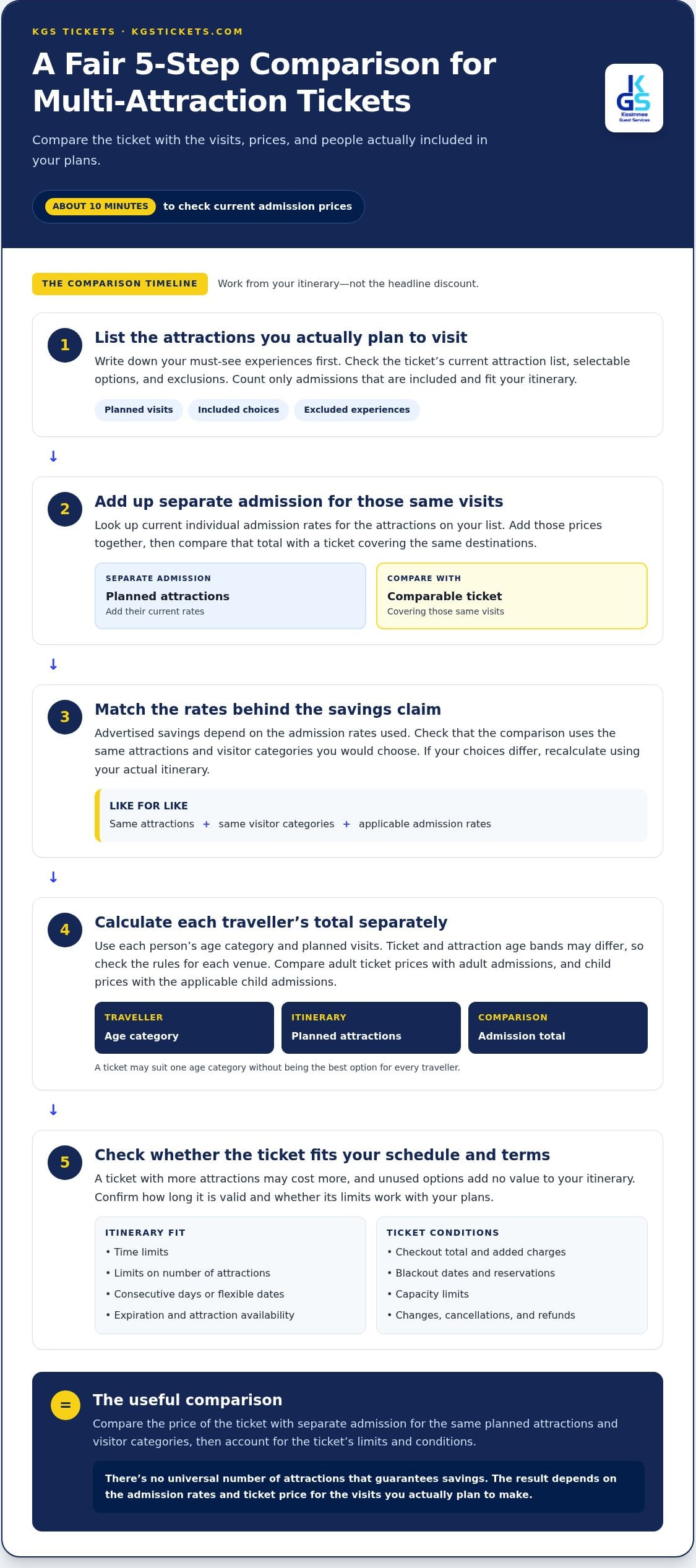
Prices vary according to the number of attractions included or selected. Add the separate admission prices for the visits you’re planning, then compare the total with a ticket covering those same attractions. There’s no fixed number of visits that guarantees savings: the result depends on the admission rates and ticket price.
A ticket covering more attractions may cost more, but unused options won’t add value to your itinerary. Estimate how many visits you’ll realistically make, and check whether the ticket is valid long enough for your schedule.
Comparing Included and Excluded Experiences
Review each ticket’s current attraction list before comparing costs. Match the available choices to your must-see experiences instead of assuming every local attraction is included. Check exclusions too: an experience may require separate admission or may not be covered.
Count only included admissions that fit your plans. This lets you compare the ticket with separate admissions on equal terms and spot restrictions that could affect your visit.
For a fair comparison, list your planned attractions and their current separate admission rates. Add them up, then compare the total with a ticket covering those same destinations. Read the terms for expiration, cancellations, refunds, and changes, as rules vary. Check whether validity runs on consecutive days or allows flexible dates.
There’s no universal number of attractions you need to visit to save money. Savings depend on whether separate admission for the attractions you’ll visit costs more than a comparable ticket. Check the attraction list and conditions before purchasing so your comparison reflects the experiences and schedule you intend to use.
Checking which admission rates are used to calculate claimed savings
Advertised savings depend on the admission rates used in the comparison. Check that those rates match the tickets you’d buy, including the same attractions and visitor categories. Using a different set of rates can produce a different savings figure from your own itinerary. Compare like with like, using the rates that apply to your planned visits.
These figures describe the listed ticket options, not the savings every traveller will receive. Compare the available attractions with your itinerary, then calculate separate admission for those same choices. Your planned selection makes the comparison useful.
To assess potential savings, note the stated savings and compare them with the difference between the ticket price and separate admission for your chosen attractions. Keep both sides consistent by using the same attractions and visitor categories. If your choices differ from those in the headline comparison, redo the calculation for your actual selections.
Before purchasing, review the checkout total and ticket terms. Look for added charges, blackout dates, reservation requirements, capacity limits, and restrictions on changing or cancelling a booking. These conditions can affect whether the ticket works for your plans. Check the rules for the specific option rather than assuming all tickets have identical terms.
For your planned attractions, compare the applicable individual admission rates with the pass’s included choices and terms. That gives you a practical baseline for weighing the stated savings against your itinerary. Explore attraction ticket options alongside your planned visits, and focus on the experiences and conditions that fit your schedule.
Adult and child pricing
A key part of how to get the best deal on multi-attraction tickets is to calculate a separate total for each traveller. Start with each person’s age category, then compare it with the ticket’s adult or child categories. Don’t assume every attraction uses the same age bands. A child might fall into different ticket categories at a museum and another attraction, so use each venue’s stated rules when totaling separate admissions.
Next, compare like with like. If a ticket price is listed for adults, compare it with the adult admission total for the attractions you plan to visit. Repeat the calculation for children using their applicable rates. Mixing adult admission with child ticket pricing, or vice versa, can make the savings appear larger or smaller than they are.
For a family itinerary, make a simple table with one row per traveller and columns for age category, planned attractions, and admission total. Add each person’s total separately. This shows whether a ticket suits the whole group or only some travellers. For example, adults might plan several paid visits while a child’s itinerary includes fewer attractions, changing the value for each person.
Before purchasing, read the age definitions for both the ticket and individual admissions. Identify the category assigned to each traveller and note any attractions with different age rules. If children receive a lower individual admission rate, include it in the comparison rather than applying the adult calculation to everyone. Check each person’s final ticket selection before paying.
For families comparing options, how to get the best deal on multi-attraction tickets starts with each person’s planned visits and applicable admission category. A ticket may suit one age category without being the best option for every traveller. Compare each person’s totals, then use the combined figures to choose what fits your trip.
Group discounts and additional benefits
For a school outing, church visit, or business trip, compare group pricing with separate admissions. Then consider whether any added benefits fit the group’s plans.
Assessing Group Discounts
Group discounts can depend on eligibility, ticket type, and the attractions selected. Check whether the offer applies to every attendee or only certain admissions, and whether the group must purchase tickets together. For example, a school group visiting a theme park should compare the group total with individual tickets for the same visit. Include any different age categories in the calculation.
Also consider coordination. A single group purchase may simplify planning, but a discount is useful only if its terms fit the attendees and itinerary. Compare the final group total with the separate-ticket total before choosing.
Comparing Additional Benefits
Some attraction tickets list extra benefits alongside admission. Review each perk and its conditions, then decide whether it adds practical value for your group. An included experience nobody plans to use shouldn’t count as much as admission to a must-see attraction.
Compare benefits consistently across options. Note whether a perk requires a reservation, applies to every ticket, or has restrictions. Count only benefits your group can use during its planned visit.
Discount timing varies by offer. Look for seasonal deals or promo codes during checkout, and read the terms for eligible dates, attractions, and ticket types. A code that doesn’t apply to the group’s chosen tickets won’t improve the comparison.
To assess value, compare the group’s total admissions, applicable discount, and usable benefits together. For example, a business outing may value a straightforward admission package more than an extra perk, while a family group may prioritize different experiences. Use the same attractions and attendee categories in each calculation.
Planning a group visit and figuring out how to get the best deal on multi-attraction tickets? Explore group ticket options with KGS Tickets and compare them with the attractions your group wants to experience.
KGS Tickets: Universal Orlando Resort Tickets
KGS Tickets offers Universal Orlando Resort tickets for visitors comparing Orlando admissions and planning a park itinerary. If Universal Orlando is on your list, compare these tickets with the individual admission and pass options you’ve considered. The same approach applies to Busch Gardens, LEGOLAND Florida Resort, or an Orlando dinner show: focus on experiences that fit your schedule.
Use your attraction list to decide whether separate tickets suit your trip better than a multi-attraction pass. When you’re ready to explore tickets for these destinations or plan a group visit, KGS Tickets offers relevant options. Compare them with your intended experiences and the ticket terms before choosing.
Visit KGS Tickets online to explore ticket options for your Orlando plans.
Turn Your Attraction List Into a Booking Plan
Let your priorities guide the final choice. Before purchasing, decide which experiences matter most and how much flexibility you want in your schedule. That makes how to get the best deal on multi-attraction tickets a practical planning decision, not simply a search for the biggest advertised saving. Choose the option that fits your intended visits and leaves room for your itinerary to unfold.
For Orlando plans, KGS Tickets offers Universal Orlando Resort Tickets and other popular theme park options. Compare these choices with the attractions you want to experience, then select what fits your plans. A well-matched ticket can leave more room for the memorable moments you came for.
Contact KGS Tickets for ticket help as you plan your visit, and get ready to enjoy the attractions that matter to you.
Frequently Asked Questions
How do multi-attraction pass prices compare with buying tickets separately?
A pass can cost less than separate tickets when its included attractions match your plans and the combined admissions exceed its price. Separate tickets may suit a trip focused on one or two experiences. If your schedule changes and you skip an included attraction, compare the pass with the tickets you would actually use, not every option it lists.
Are there discounts for children, seniors, residents, military members, or groups?
Discount eligibility varies by ticket and attraction, so don’t assume child, senior, resident, or military rates apply to every pass. Compare the terms for each traveller’s category before purchasing. For organized groups, KGS Tickets offers group discount packages for schools, churches, and businesses. Organizers can compare these packages with individual ticket options to find a suitable fit for their attendees and plans.