

Flying may seem simpler, but it isn’t always cheaper for a family. These figures reflect one family’s estimate, not a universal budget, but they show why it’s worth comparing the full cost of the trip.
It’s natural to focus on airfare and fuel, but the real trade-off also includes travel time, fatigue, flexibility, privacy, meals, and overnight stays. This guide explains how to compare these factors and choose the option that suits your family and vacation plans. You’ll learn what can make driving more affordable, when flying may save valuable time, and how to weigh comfort against cost.
Key Takeaways
- Compare the full travel budget, including rental cars, parking, meals, and overnight stays, rather than weighing airfare against fuel alone.
- Factor in travel fatigue and the time your family will have for Orlando activities when choosing how to get there.
- Consider how driving may offer more privacy and flexibility, while flying can change how you manage luggage and local transportation.
- Use your family’s route, travel style, and road-trip expenses to decide which option offers the better overall value.
Is Flying or Driving More Tiring?
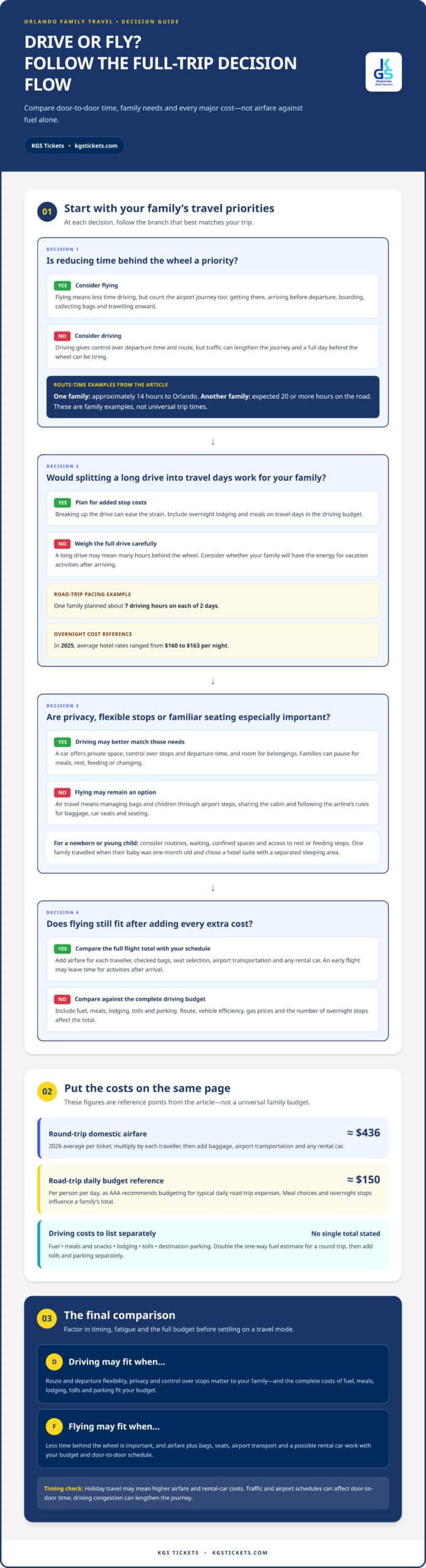
Driving can feel tiring because the work continues after the car leaves home when planning a trip to Orlando. One family’s drive to Orlando took approximately 14 hours; another family expected 20 or more hours on the road. Splitting a long journey into travel days can ease the strain, but adds overnight lodging and meal costs.
Flying means less time behind the wheel, but airport travel adds several steps when you are heading to Orlando. Factor in getting to the airport, arriving before departure, boarding, collecting bags, and travelling onward to your hotel. Your family’s total cost also depends on airfare, checked baggage, seat selection, airport transportation, and whether you need a rental car.
For families visiting Orlando attractions, the season and departure time can affect the comparison. Holiday travel may mean higher airfare and rental-car costs, while traffic and airport schedules affect door-to-door travel time. An early flight may leave time for theme park activities after you arrive. Driving lets you choose when to leave, but congestion can lengthen the trip.
Overnight stays and meals matter, too. In 2025, average hotel rates ranged from $160 to $163 per night. A road-trip budget should count each overnight room, meals on travel days, fuel, and parking at your Orlando destination. Parking costs depend on where you stay and visit, so include them separately rather than treating fuel as the whole driving bill.
| Option | Travel time | Cost factors | Fatigue |
|---|---|---|---|
| Driving | Longer, route-dependent | Fuel, meals, lodging, parking | Hours behind the wheel |
| Flying | Flight plus airport transfers | Airfare, bags, seats, rental, transport | Airport steps and connections |
Compare the door-to-door schedule and all trip expenses before purchasing your KGS Tickets, then choose the option that best fits your budget and energy for your Orlando family vacation.
Family travel flexibility and privacy
Driving gives families more control over stops, departure times, and what they pack. You can pause for a meal, a rest, or a child’s needs without coordinating around an airport schedule. That flexibility also means the driver is responsible for managing the route and deciding when everyone needs a break.
Airline rules for baggage, car seats, and travelling with children vary by carrier and ticket. Before booking through providers like KGS Tickets, review the airline’s policies on luggage, child restraints, and seating, and include any requirements in your plans. A car offers familiar seating and room for belongings, while air travel means managing bags and children through the airport.
A newborn’s routine can make privacy especially valuable. One family travelled for a major theme park vacation when their baby was one month old. They chose a hotel suite where they could close off one side of the room while the baby slept. On a road trip, families can also decide when to pause for feeding or changing, rather than waiting until the flight lands.
Flying can reduce travel time over long distances, but airport procedures and transfers still require planning. Driving gives you more control over the route, yet a full day behind the wheel can leave parents tired before vacation activities begin. If the drive takes two days, an overnight stop offers a chance to rest but adds another lodging decision.
Privacy differs, too. A family travelling by car has its own space for conversation, quiet, and changing plans. On a plane, you share the cabin with other passengers and have less control over your surroundings. When booking your itinerary through KGS Tickets, map the door-to-door journey, identify likely rest stops, and consider how your children handle waiting, confined spaces, and changes to routine. These practical details can matter as much as travel time.
Road-trip expenses for gas, food, and lodging
The best route depends on your starting point and whether saving time or avoiding tolls matters more. Compare toll and non-toll routes in a navigation app before setting out, then include the chosen route’s tolls in your budget.
Fuel Costs and Road-Trip Budgeting
Fuel is the road trip’s most direct variable cost. Distance, vehicle efficiency, and gas prices determine the total. Double the one-way fuel estimate for a round trip, then add tolls and parking separately.
Before you leave, map the route and note fuel stops, toll roads, and likely delays. A multi-day drive spreads the distance across travel days but adds meals and possibly lodging. One family planned about seven driving hours on each of two days, showing how a long route can be split up rather than completed in one stretch.
Food and Lodging Expenses
Food and lodging make a multi-day road trip different from a flight, where those costs aren’t tied to driving overnight. AAA recommends budgeting around $150 per person per day for a road trip, covering typical daily travel expenses. For a family, meal choices and the number of overnight stops influence the total; include snacks and drinks alongside restaurant meals.
Estimate overnight room costs based on your planned route and stop location.
Driving’s main drawback is the time and effort behind the wheel. Flying’s drawbacks include airfare, airport transfers, and less control over departure timing. Prepare by packing road-trip essentials, planning meal stops, and identifying overnight options before setting out. Compare those expenses with the full flight budget, then choose the route and pace that suit your family.
Comparing the cost of driving and flying to Florida
Compare the full trip total, not just airfare against fuel. A 2026 average round-trip domestic airfare was approximately $436 per ticket. For a family, multiply the fare by each traveler, then add baggage, airport transportation, and any rental car. Driving costs depend on distance, fuel use, meals, lodging, tolls, and parking.
Holiday timing can significantly change the comparison. This example includes airfare and a rental, but not every family’s itinerary or spending. When comparing driving vs flying to Orlando for a family vacation, consider how holiday dates affect fares, rental costs, and your total budget.
| Option | Main costs | Time and trade-off |
|---|---|---|
| Driving | Fuel, tolls, meals, lodging, parking | More route flexibility; longer time on the road |
| Flying | Airfare, baggage, airport transport, rental car | Less time travelling long distances; extra airport steps |
Build a side-by-side estimate for your travel dates. First, total the airfare for everyone. Add baggage and airport transfers, then include a rental if your plans require one. For driving, estimate round-trip fuel, tolls, parking, travel-day meals, and overnight rooms. Keep vacation lodging separate, since you’ll need it whichever way you travel.
Then weigh the cost against the time you’ll have to enjoy your vacation. A flight may cost more but leave more time at your destination. Driving may suit families who value flexible stops and having their own vehicle. Make the driving vs flying to Orlando for a family vacation decision based on both the complete cost and your schedule. Choose the option that best fits your priorities.
KGS Tickets
Once you’ve chosen how to travel, KGS Tickets can help with the attraction side of your Orlando vacation. Ticket options include Universal Orlando Resort, Busch Gardens, LEGOLAND Florida Resort, and Orlando dinner shows. After comparing travel time, costs, and convenience, you can plan the experiences you want to include.
Whether you arrive by car or plane, choosing attractions that suit your family helps shape your itinerary. Consider what interests everyone and how each destination fits your vacation plans. For help with attraction tickets, contact KGS Tickets.
Turn your travel choice into a vacation plan
Once you’ve chosen how to reach Orlando, focus on the experiences your family wants most. Deciding between driving and flying to Orlando for a family vacation is one part of planning; choosing attractions is another. Match each day to your family’s interests and energy, and leave room for meals, rest, and spontaneous discoveries.
KGS Tickets offers Walt Disney World Theme Park Tickets, Universal Orlando Resort Tickets, and SeaWorld Orlando Tickets. These options can help you plan a vacation around the destinations your family is excited to visit, whether you’re mapping out a full park itinerary or choosing a few highlights.
Ready to plan the attraction side of your trip? Contact KGS Tickets for vacation help. Your Orlando getaway is taking shape, and the right plans can make the journey feel like the start of the adventure.
Frequently Asked Questions
Is It Cheaper to Fly or Drive for Your Vacation?
Driving often costs less for larger families, but the more affordable option depends on your route and itinerary. Compare the complete trip budget, including airfare, baggage, airport transportation, rental needs, fuel, tolls, meals, and overnight stays. Families travelling a shorter distance may find driving offers better value. For a distant starting point or a brief vacation, flying may make more sense.
How long does it take to drive to Orlando from major U.S. cities?
Drive time depends on your starting point, route, traffic, and stops. The examples available for Orlando trips range from an estimated 9 to 11 hours with short stops to approximately 14 hours of driving. These figures illustrate how much journey length can vary, rather than setting a schedule for every city. Add time for breaks, congestion, and overnight rest.
How long are nonstop flights to Orlando from major U.S. cities?
Nonstop flight duration varies by departure airport and route. One example of a long-distance trip described a four-hour flight, but that’s time in the air, not the full journey. Include travel to the airport, time before departure, baggage collection, and onward transportation when estimating door-to-door travel time. Your family’s total may differ considerably from the flight duration.
What is the average cost of driving to Orlando for a family, including gas, tolls, and lodging?
There’s no single average cost for every family: distance, fuel use, toll choices, and overnight plans all affect the total. Estimate fuel using your route and vehicle efficiency, then add tolls, parking, meals, and any overnight rooms. A shorter drive may require fewer stops, while a multi-day road trip adds lodging and other travel-day expenses.
What are the safety and fatigue risks of a long family road trip to Orlando?
Long stretches behind the wheel can tire drivers, and children may grow restless during extended car trips. Plan a manageable schedule, include regular breaks, and don’t expect one driver to complete an exhausting journey without rest. For a multi-day trip, plan overnight stops as part of the itinerary so everyone has a chance to pause before continuing.
What are the pros and cons of driving versus flying to Orlando with children?
Driving gives families control over stops and personal belongings, but means children spend more time in the car. Flying can shorten a long journey, but adds airport procedures, baggage management, and transportation after landing. Before booking, review the airline’s policies on baggage, child restraints, and seating. Then consider how your children handle waiting, confined spaces, and changes to routine.