
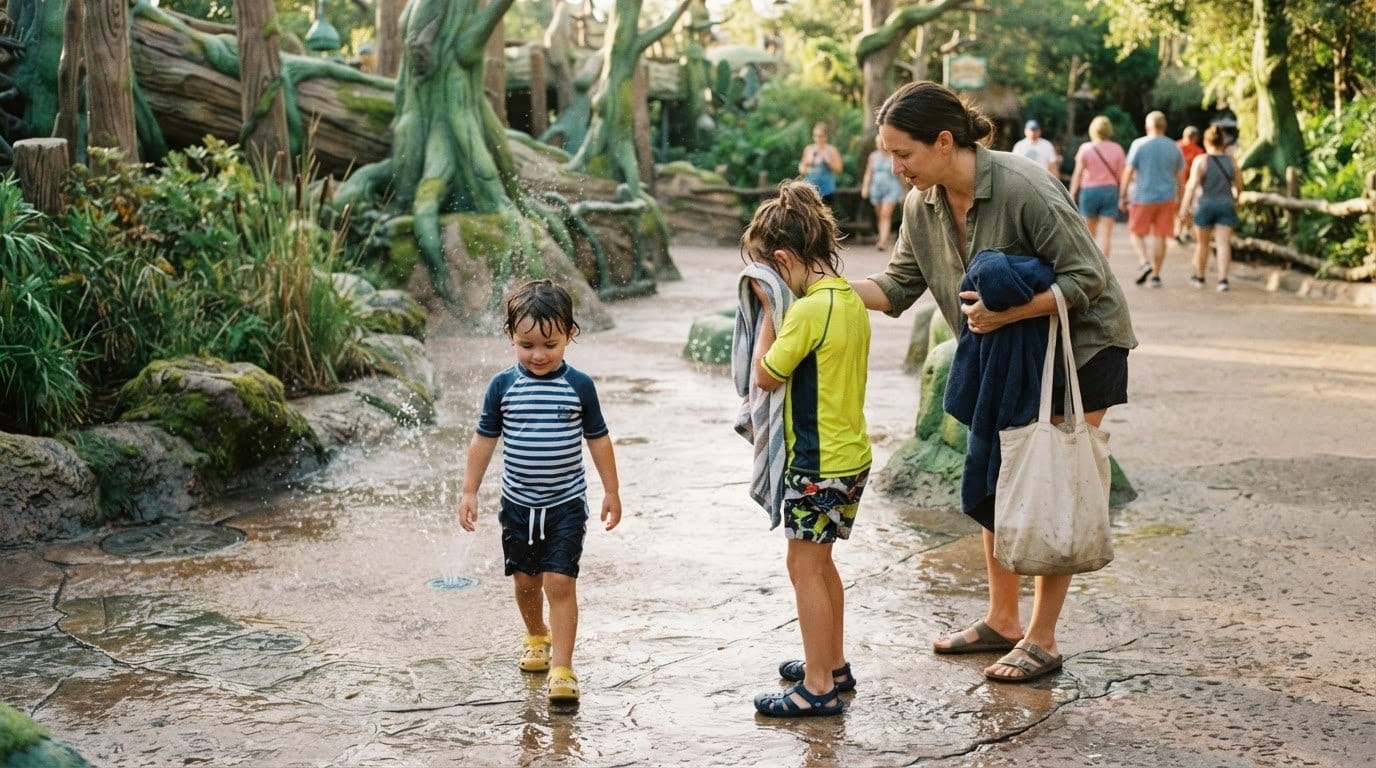
Florida theme park heat is more than a high temperature: summer highs at Walt Disney World range from 88 to 94°F, and humidity can push the heat index above 105°F. Planning how to stay cool in Florida theme parks means balancing outdoor attractions with air-conditioned breaks, water play, and time to rest.
If Florida’s heat and humidity sound demanding, planning ahead can help, especially when you’re visiting with kids. Build flexibility into your day so the visit doesn’t feel like a race from one ride to the next.
This guide explains how Florida’s summer weather can feel, when to plan indoor breaks, and how to fit splash areas into your day. It also covers practical packing, including spare clothes and swim gear for children, so wet clothes or a water break don’t derail your plans.
Key Takeaways
- Plan for humid, draining conditions as well as high temperatures, and pace outdoor activities with cooler pauses.
- Start early and consider stepping away during the hottest part of the day before returning for evening fun.
- Look for splash areas as a refreshing stop, and build time to dry off and change into comfortable clothes.
- Pack swim gear and spare outfits for kids so a water-play stop can fit smoothly into your park day.
1. Central Florida summer temperatures and humidity
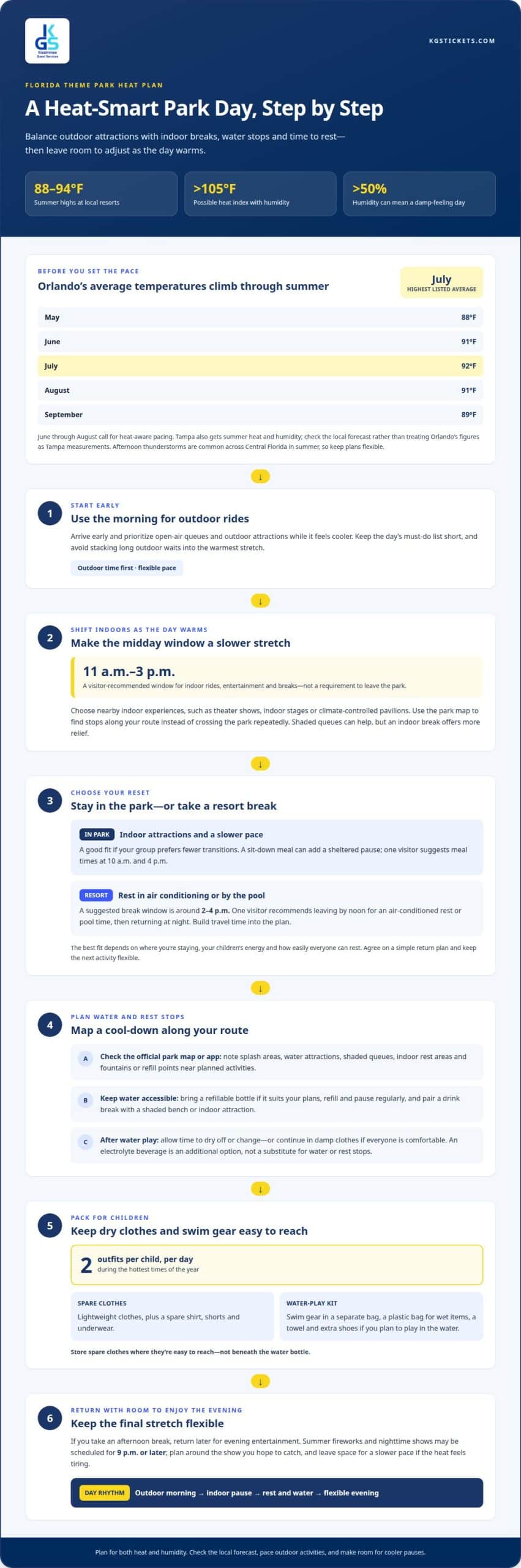
Orlando theme park days can feel hotter than the thermometer suggests. Summer highs at local resorts range from 88 to 94°F, while humidity can push the heat index above 105°F. That combination makes shaded outdoor queues feel warm and sticky, even before afternoon storms arrive. A forecast showing more than 50% humidity can signal a damp-feeling day. Plan for both heat and moisture, not temperature alone.
Orlando’s average temperatures climb through summer: 88 degrees in May, 91 in June, 92 in July, 91 in August, and 89 in September. July is the highest monthly average in that range, but June through August all call for heat-aware pacing. Tampa visitors should also expect summer heat and humidity, but Orlando’s figures shouldn’t be treated as Tampa measurements. Check the local forecast as you plan outdoor time, and leave room to adjust your schedule.
Which parks have the most indoor rides and air-conditioned attractions? There’s no supported park-by-park ranking here, but major Orlando theme parks have clear indoor examples: classic theater shows, interactive indoor stages, and immersive climate-controlled pavilions. Indoor attractions can offer a chance to sit and take a break between outdoor activities. Use the park map to identify indoor entertainment near your planned route.
For Orlando and Tampa, the hottest stretch is summer; Orlando’s listed averages peak in July. Across the region, the summer heat index can exceed 105°F when humidity is factored in. Central Florida also gets afternoon thunderstorms almost daily during summer, so keep plans flexible and account for sudden rain. For a practical approach to how to stay cool in Florida theme parks, alternate outdoor attractions with indoor stops, and avoid stacking long outdoor waits during the warmest part of your day.
During peak months, summer humidity can push the heat index above 105°F. Orlando’s listed averages peak in July, with June through August all calling for heat-aware pacing; Tampa also gets summer heat and humidity, so check the local forecast before heading out with your KGS Tickets.
2. Early starts and midday hotel breaks
Arrive early and use the cooler-feeling morning for outdoor rides and open-air queues. Then shift your plan as the day warms. One visitor recommends indoor rides, entertainment, and breaks from 11 a.m. to 3 p.m. Treat that window as a cue to slow down, not a requirement to leave the park. Choose nearby indoor experiences and allow more time between attractions instead of crossing the park repeatedly.
A resort break can reset the day. The suggested window is around 2 to 4 p.m., described as the hottest and most crowded stretch. If you’re staying at a resort, leave the park, rest in an air-conditioned room or by the pool, then return in the evening. One visitor suggests leaving by noon for an air-conditioned rest or pool time before coming back at night. Build travel time into the plan so the break doesn’t become a rushed round trip.
Make the pause work for your group. Before leaving, agree on a simple return plan and keep the next activity flexible. A sit-down meal can also create a sheltered pause; one visitor recommends meal times at 10 a.m. and 4 p.m. If your group prefers fewer transitions, stay in the park and choose indoor attractions during the midday window. The right choice depends on where you’re staying, your children’s energy, and how easily everyone can rest.
Returning later can make room for evening entertainment. Summer fireworks and nighttime shows may be scheduled for 9 p.m. or later, so plan the afternoon break around the show you hope to catch. Keep the day’s must-do list short, then leave space for a slower pace if the heat feels tiring. As you map the outing, keep your Orlando park schedule realistic, with time for both the morning visit and an evening return.
3. Finding water features and splash areas
Florida parks vary, so use each park’s official map or app to find water features, shaded queues, and indoor rest areas. Look for splash zones and water attractions along your planned route, then check ride descriptions to see whether you might get wet. Maps make it easier to choose stops that suit your group, without crossing a large park just for a quick cool-down.
At Walt Disney World, check the map for the park you’re visiting and note shaded queues or indoor stops near outdoor attractions. Shade can offer some relief while you wait, but it won’t cool you as much as an indoor break. Plan splash areas as stops, especially with children, and allow time afterward to dry off or change, or to continue in damp clothes if everyone is comfortable.
Bring a refillable water bottle if it works for your park-day plans. Use the map to find fountains or refill points, and pause for water regularly rather than waiting until everyone feels thirsty. Pair a drink break with a shaded bench or indoor attraction. Refill, rest, then continue to a nearby activity. Keep the bottle within easy reach, not buried beneath spare clothes.
Water is a practical everyday drink during a warm park visit. If you bring an electrolyte beverage, treat it as an additional option, not a substitute for water or rest stops. Keep children’s drinks accessible and pause after active play. For example, visit a splash area, dry off in the shade, then refill bottles before heading to the next attraction. This routine makes cooling breaks easier to fit into a busy day.
Walt Disney World is specifically mentioned: its park map can help locate shaded queues and indoor stops. Park maps can also help visitors find fountains or refill points.
4. Packing extra clothes and swim gear for children
Pack for changing conditions, not just the morning forecast. During the hottest times of the year, plan two outfits per day for each child. Choose lightweight clothes that feel comfortable after a splash area or water ride. A spare shirt, shorts, and underwear can make it easier to move on to other attractions.
Pack swim gear in a separate bag, along with a plastic bag for wet items. Bring a towel and an extra pair of shoes if you plan to play in the water. Keep spare clothes somewhere easy to reach, rather than buried beneath snacks and other supplies.
For outdoor time, pack a lightweight hat and sunglasses for each child. Choose comfortable clothing that won’t feel heavy after active play, and use layers that are easy to add or remove. Before leaving, check that everyone has their essentials. A little preparation can keep a wet shirt or uncomfortable outfit from cutting the day short.
If you or a child feels unwell from the heat, stop the activity, move to a cooler place, and alert a park employee. Walt Disney World has First Aid stations in all 4 theme parks and both water parks. Its Baby Care Centers are in each park and open during park hours. Use them as a place to seek assistance with children, rather than trying to push through the day.
Planning a Walt Disney World visit? Pair your family’s packing list with Walt Disney World Theme Park Tickets as you prepare for the park day.
KGS Tickets: Universal Orlando Resort Tickets
KGS Tickets sells Universal Orlando Resort tickets for visitors planning a park day around the Florida heat. After considering early starts, indoor breaks, water stops, and spare clothes for children, choose the attractions that suit your group. KGS Tickets also offers Busch Gardens and LEGOLAND Florida Resort tickets, giving families more park options to consider.
Keep your plans realistic for your group. A day with young children may call for a flexible itinerary, while older kids may want to prioritize particular attractions. Your cooling plan and ticket choice work together: decide which park fits your family’s interests, then pace the visit with rest and water stops.
Visit kgstickets.com to explore Universal Orlando Resort Tickets.
Make Your Park Day Your Own
A memorable Florida visit doesn’t require a packed schedule. Choose the attractions that matter most to your family and leave room to adjust as the day unfolds. Planning how to stay cool in Florida theme parks can make the outing feel more manageable, especially with children.
When you’re ready to plan your visit, KGS Tickets offers Walt Disney World, Universal Orlando Resort, and SeaWorld Orlando tickets. Choose the destination that best fits your family’s interests and the kind of day you want.
Contact KGS Tickets for help planning, and get ready to make bright Florida memories at your own pace.
Frequently Asked Questions
How Hot Is It Really?
Walt Disney World summer highs average 88-94°F, and the heat index can exceed 105°F with humidity. That means the air temperature alone may understate how demanding outdoor waits feel. Use the heat index as a planning cue: save longer stretches outdoors for cooler parts of the day, and leave room for indoor pauses if the heat starts wearing on your group.
What are the best ways to stay cool at Florida theme parks in summer?
Start with a flexible plan: alternate outdoor attractions with indoor entertainment, use shaded areas for brief rests, and schedule water breaks along your route. Choose nearby stops to avoid unnecessary walks between activities. With children, watch for signs of fatigue and be ready to slow down or leave the park. A less crowded schedule can make breaks easier to fit in.
What are the park rules for bringing water bottles, cooling towels, portable fans, and misting fans?
Each Florida theme park sets its own rules for items brought through the entrance, so one rule won’t apply everywhere. Bottle type, fan design, and how an item is used may affect whether it’s allowed. Keep gear easy to reach and follow posted entry and attraction instructions. Don’t assume an item permitted at one park will be allowed at another.
How much do cooling towels, misting fans, and lockers cost at major Florida theme parks?
Costs for cooling towels and misting fans vary by park and purchase option, and locker charges depend on the locker type and rental arrangement. To keep spending predictable, decide which items to bring from home and which conveniences matter most during your visit. Avoid relying on a statewide average when planning your budget.
When are Florida theme parks least hot and least crowded during the day?
Mornings are generally a better time for outdoor activities than midday, while evenings may offer another opportunity after a rest. Heat and crowd levels vary with weather, park schedules, and visitor patterns, so conditions won’t be the same every day. Do priority outdoor activities earlier, then keep your afternoon flexible for indoor breaks.
How often should visitors drink water in Florida heat, and what are signs of heat exhaustion?
Drink water regularly throughout your visit, especially during outdoor activity, rather than waiting until you feel very thirsty. Warning signs can include unusual weakness, dizziness, nausea, or heavy sweating. Stop, move to a cooler place, and alert a park employee if someone feels unwell. Walt Disney World has First Aid stations in its theme parks and water parks for assistance.