

Saving for a Disney vacation fund starts with choosing a lower-demand travel window, setting a family savings target, trimming extras, and setting aside spare income. Mid-January, some early fall weekdays, and late August into September may offer better value because demand is lighter. A few practical choices can make the goal feel more manageable.
It’s easy to focus on the biggest trip expenses, but small, steady savings habits can also help build your budget. Plan as a family, redirect everyday savings toward the trip, and curb extra spending without losing sight of the fun. Choosing when to travel can also help you make the most of your vacation fund.
Key Takeaways
- Compare travel dates and seasons before settling on a plan, since lighter-demand periods may help lower trip costs.
- Give every family member a simple savings role and redirect everyday savings toward a dedicated vacation fund.
- Set limits for add-ons and souvenirs before the trip so exciting extras don’t crowd out your priorities.
- When a bill is paid off or unexpected income comes in, consider moving part of that freed-up money into your vacation savings.
1. Choosing lower-cost travel days and seasons
Start your calendar search with periods when demand may be lighter. Mid-January, some early fall weekdays, and late August into September may offer better value for your upcoming getaway. Use these windows to compare dates before committing to travel. They’re starting points, not a substitute for building a trip budget around your family’s plans.
Keep your dates flexible if school, work, and other commitments allow. Compare weekday and weekend arrivals, then review the full trip cost for each option. A lower-demand season may affect more than admission passes: it can also shape resort choices and travel options. Make a shortlist of possible dates, then estimate tickets, lodging, meals, and transportation for each.
How much do park tickets, hotels, food, and transportation cost? There’s no single total for every family. Costs depend on travel dates, party size, ticket choices, lodging, meals, and transportation needs. Air travel for a family can potentially cost thousands of dollars, so include airfare if it applies. For a driving trip, account for transportation and parking charges instead.
Once you compare dates, choose the option that leaves room for your priorities. For example, if the budget is tight, consider whether a shorter park visit still gives your family the experience it wants. A KGS Tickets gift card can also help you set aside spending money; discounts on KGS Tickets gift cards are typically around 5%. Treat that discount as one budgeting tool, not a reason to buy more than you plan to use.
Look closely at add-ons, too. Skipping one day at the theme parks can save hundreds of dollars, while skipping multi-park upgrades may save a family $250 or more. Decide which parks and experiences matter most before choosing tickets. That way, the dates and ticket options support the trip you want, rather than adding charges that don’t fit your plans.
2. Family budgeting and saving strategies
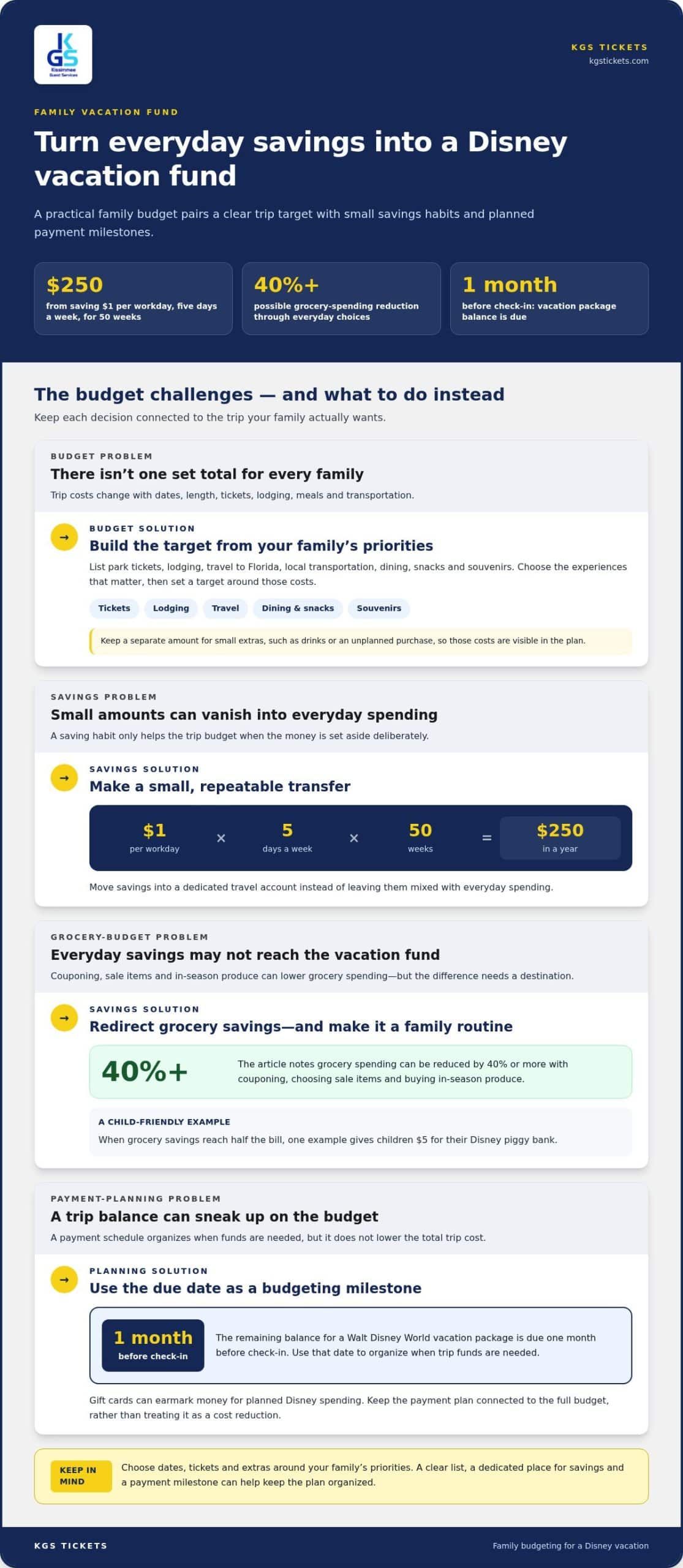
There’s no single total for a Disney vacation for a family of four. The budget depends on travel dates, trip length, tickets, lodging, meals, and transportation. Set a target after listing the experiences your family wants and the costs to plan for.
Include park tickets, lodging, travel to Florida, local transportation, dining, snacks, and souvenirs. Set aside a separate amount for small extras, such as drinks or an unplanned purchase. If your family prefers a slower morning, consider whether arriving at the park later changes your dining and transportation plans. A clear list of categories makes trade-offs easier to spot before booking.
Make saving a shared routine. Putting aside $1 per workday, five days a week for 50 weeks, adds up to $250 a year. At home, couponing, choosing sale items, and buying in-season produce can help reduce grocery spending by 40% or more. Move the savings into a dedicated travel account instead of letting them disappear into everyday spending. Children can contribute too: one example gives them $5 for their Disney piggy bank when grocery savings reach half the bill.
Gift cards can earmark money for planned Disney spending, while a payment schedule helps organize when trip funds are needed. A Walt Disney World vacation package has its remaining balance due one month before check-in, so use that date as a budgeting milestone. A schedule can help manage cash flow, but it doesn’t reduce the overall trip cost.
For a practical next step, compare your planned park days with available Walt Disney World Theme Park Tickets as you build the family budget. Choose ticket options that match the days and experiences your family has prioritized.
Children ages six and five expected about $100 each; share large Disney portions with family to save and try snacks.
3. Reducing upcharges and souvenir spending
You can reduce costs without sacrificing key experiences by choosing your priorities before arriving. Keep a favorite character meal or signature snack, then trim less important extras. Decide whether the meal is a must-do for your family and plan simpler dining around it.
Drinks can add up during a Walt Disney World visit. Set a drink budget before entering the park, and bring nonperishable snacks for smaller cravings. That leaves more room for the treat your family is excited to try.
At most Disney quick-service locations, adults can purchase kids’ meals. They usually cost half as much as adult meals and include a side and drink. At casual dining locations, consider ordering from the children’s menu if the portions suit your appetite. Sharing large portions with family can also reduce spending and leave room to sample more snacks.
Plan souvenir spending before Mickey ears, plush toys, and park merchandise catch everyone’s attention. Give each family member a set amount, and agree to pause before making larger purchases. A Disney gift card can keep souvenir money separate from the rest of your vacation spending, and Disney gift cards can be used for souvenirs at Walt Disney World.
Before adding upgrades to a vacation package, identify what each extra purchase adds to the experience. Compare that benefit with your family’s must-do list, then skip add-ons that don’t support it. For example, choose one special meal or keepsake rather than several spontaneous extras. A short spending plan helps protect the moments your family values most.
4. Saving money from paid-off bills and unexpected income
When you pay off a credit card balance or another bill, redirect its former payment into a separate vacation account. Set the automatic transfer for the same date the bill was due. This turns a familiar budget expense into steady progress toward tickets, travel, and other planned costs, without relying on leftover cash.
Unexpected income can help, too. When a refund, cash gift, or extra payment arrives, decide in advance how much to put toward the trip and how much to keep available for other needs. Move the vacation portion promptly so it doesn’t blend into everyday spending. Record each deposit so your family can track the fund’s progress and adjust its target.
Small amounts count. Repeat the same approach with other eligible transactions, then transfer the accumulated difference regularly. For loose change, compare options before exchanging it: Coinstar machines charge approximately 9% to turn coins into a slip redeemable for bills at the cashier.
U.S. Savings Bonds are another way to set money aside, but they’re best for funds you can leave untouched. Cashing an EE or I Bond within the first five years from its issue date incurs a three-month interest penalty; bonds at least five years old can be cashed without a penalty.
Choose a savings method that matches when you’ll need the money. A paid-off bill’s former payment or unexpected income can go into a dedicated savings account, while a bond requires a longer timeline. Keep the trip date in view, and direct funds toward park tickets or another priority only after accounting for bills still due.
KGS Tickets: Walt Disney World Theme Park Tickets
KGS Tickets offers Walt Disney World Theme Park Tickets to help families plan the park-ticket portion of a Disney vacation. Once you’ve chosen your travel dates, set your spending priorities, and built a savings plan, comparing ticket options is a practical next step. This helps keep your planned park days aligned with the experiences your family wants most.
If your Florida trip includes other attractions, KGS Tickets also offers Universal Orlando Resort, Busch Gardens, and LEGOLAND Florida Resort tickets. Consider them if they fit your itinerary and budget. Adding destinations isn’t necessary to make a Disney trip memorable.
Use your budget to guide the ticket decision, then continue setting aside money for the rest of the trip. Visit kgstickets.com to explore Walt Disney World Theme Park Tickets.
Turn your vacation plan into your next step
A vacation fund is more motivating when it’s connected to a real plan your family can picture. Choose the experiences that matter most, then make your next savings decision support them. A dedicated account or regular transfer can keep the goal visible while you manage everyday spending.
As your plans take shape, saving for a Disney vacation fund can go hand in hand with choosing park tickets that fit your itinerary. KGS Tickets offers Walt Disney World Theme Park Tickets, Universal Orlando Resort Tickets, and SeaWorld Orlando Tickets to consider if your trip includes those destinations.
Ready to discuss tickets for your plans? Contact KGS Tickets about your trip. Keep taking practical steps, and the excitement of planning can grow alongside your savings.
Frequently Asked Questions
How much should I save each month for a Disney trip?
Divide your remaining trip savings target by the months until you plan to travel. First estimate your expected expenses, subtract what you’ve already saved, then spread the balance across the months available. Review the monthly amount if plans change. This gives saving for a Disney vacation fund a clear pace without relying on a one-size-fits-all figure.
What is the best way to set up a dedicated vacation savings fund?
Use a separate account or clearly labeled savings space so trip money doesn’t blend with everyday spending. Name it after your goal, such as “Disney trip,” and choose a regular transfer date that matches your pay schedule. Keep a simple record of deposits and withdrawals. If family members contribute, track their contributions in the same place.
What budgeting apps or savings accounts work well for a Disney vacation fund?
Choose a budgeting app that lets you create a custom trip category, record deposits, and compare planned spending with your target. A separate savings account can work well if it’s easy to access when trip expenses are due but distinct from your everyday account. Before choosing a tool, compare its fees, transfer options, and account access with your preferences.
How much do Disney park tickets, hotels, food, and transportation cost?
Costs vary with travel dates, party size, ticket choices, lodging, meals, and transportation needs. Air travel for a family can potentially cost thousands of dollars. For a driving trip, include transportation and parking charges.