
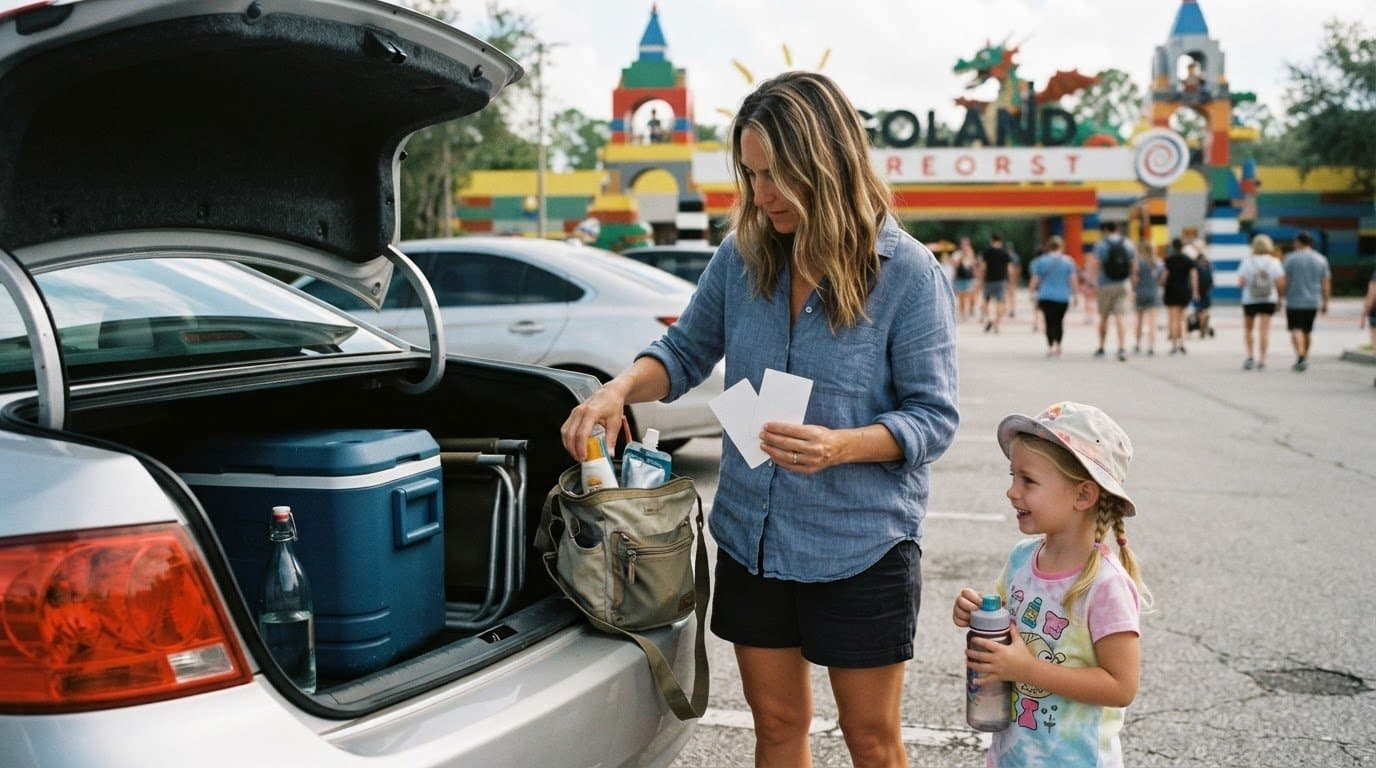
A lighter bag makes for an easier park day. Knowing what not to bring to a theme park starts with leaving behind anything the park prohibits, plus bulky or unnecessary items you won’t want to carry. Check the park’s rules before packing, since restrictions can differ from one destination to another.
It’s easy to pack for every possibility, but a little planning can help you avoid extra weight and make room for what you’ll actually use. This guide explains what to leave at home and how a park map can help you plan your day before you arrive.
You’ll also find practical tips for comfortable clothing and weather preparation, including when a light rain layer may be useful. With a considered bag and a plan for the day, you can focus less on what you’re carrying and more on the rides, shows, and moments ahead.
Key Takeaways
- Choose comfortable clothes and plan weather gear around the day’s forecast and the attractions you want to enjoy.
- Use the park’s map and rules to spot restrictions before packing, since prohibited items can differ between destinations.
- Pick a bag that suits your essentials, and avoid packing extras that could make it cumbersome to carry.
- Plan snacks and meals with the park’s outside-food and drink policy in mind.
2. What to wear and weather gear
Choose clothes for walking, waiting, and getting on and off rides. A breathable T-shirt, comfortable shorts or trousers, and well-fitting walking shoes make a practical starting outfit. Skip new shoes that haven’t been broken in. Stiff footwear and clothing that needs constant adjustment can become distracting during a full day at the park.
Check the day’s forecast before choosing extra layers. A light rain poncho or windbreaker can help you stay comfortable around water attractions. Pack it where you can reach it easily, rather than burying it beneath other items. If conditions may change, a light layer is easier to carry than a bulky coat.
Match accessories to your plans. A cap can be useful outdoors, while sunglasses can make bright parts of the day more comfortable. If you bring either, decide where to store them securely before boarding a ride. Avoid loose accessories that could fall or need to be held as you move through the park.
- For walking: Wear broken-in shoes with a secure fit.
- For water rides: Bring a light poncho or windbreaker.
- For changing conditions: Choose a packable layer instead of a heavy coat.
- For ride time: Secure hats and sunglasses before boarding.
Use the park map to make clothing choices more specific. Mark water attractions, outdoor shows, and indoor stops, then consider how your outfit will work for each. If your route includes a water ride, keep a rain layer accessible. If you expect to move between outdoor paths and air-conditioned spaces, a removable layer offers flexibility without overpacking.
Before leaving, do a quick comfort check: walk in your shoes, test your pockets, and make sure each layer fits easily. Leave delicate or restrictive clothing at home if it could limit movement or need special care. An outfit suited to your itinerary helps keep the focus on the day’s rides and experiences.
3. What items are prohibited at major U.S. theme parks?
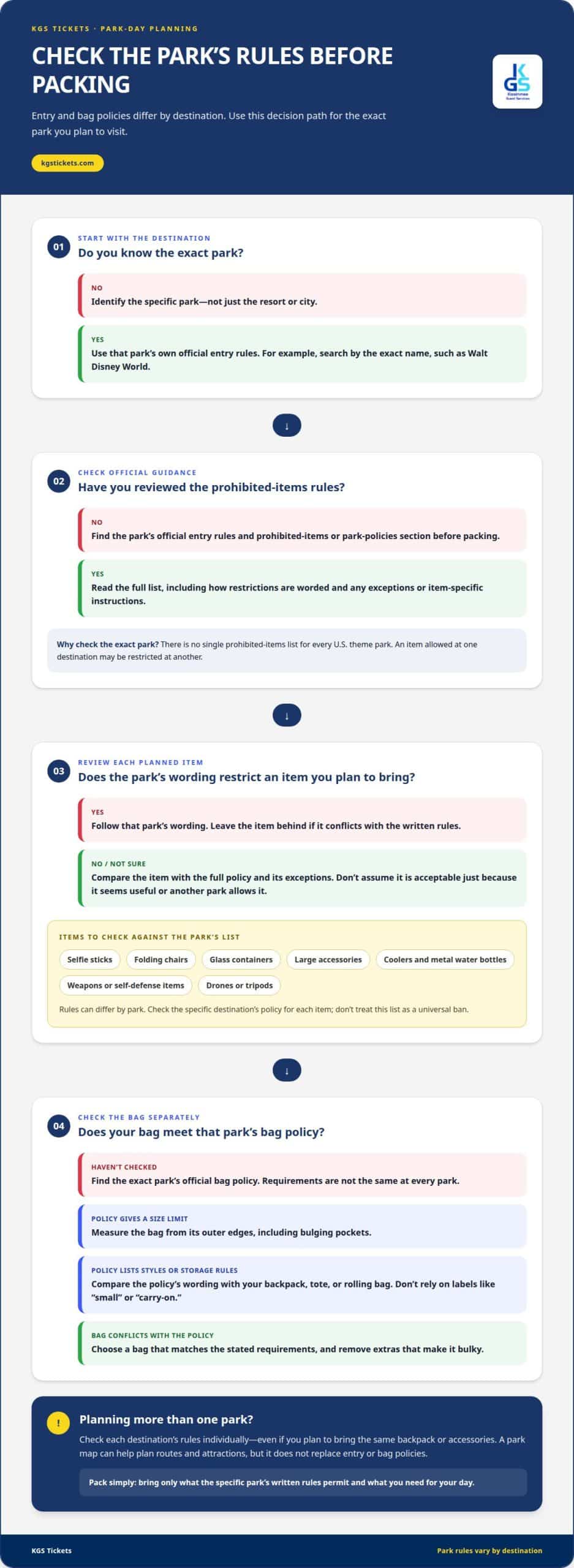
There isn’t one prohibited-items list for every U.S. theme park. Each destination sets its own entry rules, so an item allowed at one park may be restricted at another. Before packing, open the specific park’s official rules and look for its prohibited-items or park policies section. Search by the exact park name, such as Walt Disney World, to find the relevant guidance.
Read the full list rather than relying on a general packing guide. Pay attention to how each restriction is worded, including exceptions or instructions for particular items. Don’t assume a selfie stick, folding chair, glass container, or large accessory is acceptable just because it seems useful. Compare each item you plan to bring with the park’s own wording.
- Choose the destination: Identify the exact park, not just the resort or city.
- Review the rules: Find the park’s entry and prohibited-items guidance.
- Check your planned items: Compare items such as a selfie stick or folding chair with the stated restrictions.
- Pack simply: Leave an item behind if it conflicts with the park’s written rules.
Use the park map as a planning tool, not as a substitute for entry policies. A map can help you identify your route and attractions, while the rules explain what you may bring through the entrance. Keep those checks separate. Planning to attend an outdoor show, for example, doesn’t establish whether a chair is permitted.
Revisit the rules if your itinerary includes more than one destination. A family visiting two parks on separate days should read each park’s guidance individually, even if bringing the same backpack or accessories. This helps prevent surprises at the entrance and makes it easier to decide what belongs in your bag. If a rule names an item you’re considering, follow that park’s wording rather than assuming another destination has the same policy.
Potentially restricted items include selfie sticks, folding chairs, glass containers, and large accessories, but rules differ by park. Check the specific destination’s prohibited-items list before packing.
Glass containers may be restricted, but whether coolers or metal water bottles are allowed depends on the park. Check the specific park’s policies for each item.
Whether a weapon or self-defense item is prohibited depends on the park’s entry rules. Check the specific park’s prohibited-items guidance for anything you plan to bring.
A selfie stick may be restricted, and rules for drones or tripods can vary by destination. Check the specific park’s policies before bringing any of these items.
4. What bags and backpacks are not allowed in theme parks?
There’s no single bag rule for every U.S. theme park. A backpack that suits one visit may not meet another park’s entry policy. Before packing, find the official rules for your exact destination, such as Walt Disney World, and look for its bag policy. Check any stated limits for dimensions, bag styles, and storage. Don’t assume the same requirements apply across different parks, even during one vacation.
Read the policy with your planned bag beside you. If the park publishes a size limit, measure the bag from its outer edges, including bulging pockets. If it lists restricted types, compare those descriptions with your backpack, tote, or rolling bag. Don’t rely on labels such as “small” or “carry-on”; they may not match the park’s stated measurements.
Use this quick packing check:
- Identify the destination: Use the exact park name, not only the city.
- Find its bag policy: Read the current entry guidance on the park’s official site.
- Compare your bag: Match its size and style against the policy’s wording.
- Reduce extras: Remove items you don’t need if they make the bag bulky.
Think about how you’ll carry the bag throughout the day, too. A large backpack packed with spare clothes, souvenirs, and snacks can feel cumbersome between rides and shows. A compact day bag with essentials such as a phone, wallet, and weather layer is easier to manage. This is a comfort choice, not a substitute for checking the park’s entry rules.
If your trip includes more than one park, repeat the policy check for each destination. Walt Disney World and another resort may use different wording or requirements. Keep the applicable rules in mind while packing, and leave any bag at home if it conflicts with the park’s published restrictions. Planning ahead can help you avoid repacking at the entrance.
4. Can you bring outside food and drinks into theme parks?
There isn’t one yes-or-no rule for every U.S. theme park. Each destination sets its own policy for outside food and drinks, so the answer depends on the park you’re visiting. A meal, snack, or reusable drink container may be treated differently from one destination to another. Use the specific park’s written entry policy to guide what you pack rather than assuming a rule applies everywhere.
Plan food around your day, not just your bag. A park map can help you locate dining areas and decide when to pause. If you’re considering bringing a snack or drink, include it in your policy review before packing. Check whether the park’s guidance allows the specific item you have in mind. Don’t assume a rule for one food or drink applies to every kind.
Eating outside the theme park may save money and make a meal break feel more relaxing. This can suit visitors who prefer a quieter pause away from rides and queues. Consider the time and convenience, too. A meal outside the park may take you away from your planned route, while bringing a snack inside depends on the park’s rules.
- Choose your park: Use the exact destination, such as Walt Disney World.
- Review its policy: Look for the park’s guidance on outside food and drinks.
- Consider specific items: Evaluate snacks, meals, and drinks separately.
- Plan your break: Use the park map to consider dining stops and your route.
If you’re carrying food for a child or planning around dietary needs, identify those items before packing. Then compare each one with the applicable park policy. If bringing food isn’t part of your plan, mark a dining stop on the map instead. This keeps your meal decision practical and avoids assumptions about what every park allows.
KGS Tickets: Walt Disney World Theme Park Tickets
KGS Tickets offers premier theme park tickets for visitors planning their park days. After reviewing what to pack, checking park policies, and considering your route, choosing tickets is a practical next step. KGS Tickets also offers a variety of other attraction passes and regional resort tickets.
Decide which parks fit your plans, then explore the corresponding ticket options. If your favorite destination is on your itinerary, start with its theme park tickets. If you’re visiting other attractions, consider the relevant ticket options as you organize your schedule.
For help choosing tickets for your plans, contact KGS Tickets.
Make Your Next Park Day Easier to Plan
Planning what not to bring to a theme park is one part of getting ready; choosing where to go is another. Use your packing plan to shape the day you want, whether you’re focusing on one destination or planning visits to several parks. A clear plan gives you a useful starting point for choosing which attractions belong on your schedule.
KGS Tickets offers Walt Disney World Theme Park Tickets, Universal Orlando Resort Tickets, and SeaWorld Orlando Tickets. These options can help you move from preparing for a visit to planning your park days. Choose a destination that fits your plans, then explore its ticket option as you organize your trip.
Contact KGS Tickets for help as you plan your next theme park visit. Here’s to a day filled with the experiences you’re looking forward to.
Frequently Asked Questions
What clothing, costumes, and footwear are prohibited at theme parks?
Theme parks may restrict specific clothing, costumes, or footwear under their own dress policies. Use the park’s guidelines to decide what not to bring to a theme park, especially costume pieces or shoes that could make moving around difficult. A quick outfit check helps you spot what not to bring to a theme park before leaving, so you can choose comfortable alternatives for the day.
Are coolers, glass bottles, and metal water bottles allowed at theme parks?
Glass containers may be restricted, and whether coolers or metal water bottles are allowed depends on the park. Check that park’s policies for each item.