

What if a toddler’s theme park meltdown is a signal to lower the demands, not push through? If noise, crowds, heat, long waits, or a missed nap have led to tears, it can be hard to know whether to comfort, distract, pause, or head out. Learning how to handle theme park meltdowns with toddlers starts with recognizing that overwhelm isn’t bad behavior, and that one difficult moment doesn’t have to define the day.
This guide offers a calm, practical response: first help your child feel safe, then reduce stimulation and decide what to do next. You’ll learn to spot common triggers, plan around meals and rest, and find a calmer place to pause, including family-care facilities where available. Most of all, you’ll find ways to adjust expectations, recover together, and enjoy the parts of the park day that still feel right for your family.
Key Takeaways
- Recognize how tiredness, hunger, sensory overload, and waiting can signal that your toddler needs a reset, not a reprimand.
- Learn how to handle theme park meltdowns with toddlers by prioritizing safety, reducing stimulation, and reconnecting before deciding what comes next.
- Use a simple pre-park checklist and realistic schedule to make the day more comfortable and avoid taking on too much.
- Decide whether to ease back into the day, take a longer break, or head out without treating a change of plan as a parenting failure.
Why Theme Park Meltdowns Happen With Toddlers, and What They May Signal
A meltdown is a moment of overwhelm, not proof that a toddler is being defiant or that a caregiver has done something wrong. A temper tantrum can involve intense crying, shouting, or difficulty settling. In a busy park, it may also mean your child has run out of capacity to cope. The cause isn’t always obvious in the moment.
A trigger can set off a meltdown without the child choosing to feel overwhelmed. Hunger, tiredness, heat, sensory input, transitions, and waiting can all play a part. Often, there isn’t one single cause. A missed rest, a long queue, and a sudden change of plan may build on one another over the course of the day.
Which theme-park pressures can overwhelm a toddler?
Crowds, loud sounds, bright attractions, warm weather, and close quarters can demand a lot from a young child. Long queues add waiting with little freedom to move, while unfamiliar routines can make meals, naps, and transitions less predictable. Consider three broad sources of pressure: physical needs, sensory demands, and changes in routine. Several small strains may accumulate before distress becomes visible.
How can caregivers spot early signs of overload?
Look for changes from your child’s usual behavior. They might grow quiet or withdraw, become unusually irritable or restless, resist the next transition, or react more intensely to a small frustration. Signs vary from child to child and aren’t a diagnosis. Pause and notice what has changed. Your toddler may need food, rest, comfort, or a calmer setting.
Tears in the middle of a much-anticipated park day can be stressful. Try to treat the moment as useful information, not a verdict on your parenting. Recognizing possible triggers makes how to handle theme park meltdowns with toddlers feel less like guesswork and helps you choose a calmer next step.
How to Handle a Toddler Meltdown at a Theme Park, Step by Step
In the moment, keep the goal simple: help your child feel safer and reduce what they have to manage. Pause, get close, and lower the pressure before trying to solve the whole day. A calm first response may not stop the crying right away, but it gives you a steady starting point for how to handle theme park meltdowns with toddlers.
- Pause and check safety. Stay close. If practical, move away from ride entrances, walkways, or congested areas where your child could be jostled or dart into a hazard. Ask another adult in your group to hold your place or watch belongings if needed.
- Check immediate needs. Consider whether your toddler may be thirsty, hungry, too hot, uncomfortable, or overdue for rest. Offer one simple choice, such as water or a quiet sit, rather than asking several questions at once.
- Lower stimulation. Step away from loud sounds, crowds, or the activity adding pressure. Find a calmer spot where you can pause without rushing to the next attraction.
- Connect with brief reassurance. Use a soft voice and short phrases such as “I’m here” or “Let’s take a break.” Staying steady and responsive supports co-regulation strategies. Save explanations and problem-solving for later, when your child is more settled.
- Reassess before moving on. Give your toddler time, then consider whether to try a quieter activity, take a longer break, or change the plan. Distress may take time to ease, and that’s okay.
When should you pause, change plans, or seek help?
If your child remains overwhelmed, don’t push straight back into a queue. Choose a calmer activity or pause in a quieter space. If your toddler’s safety, or anyone else’s, becomes difficult to manage, ask nearby park staff for appropriate assistance. Adapting the plan is a practical choice, not a failure.
A flexible day starts with a plan that leaves room for breaks. While organizing your visit, you can review attraction ticket options as one part of planning a manageable day.
How to Prevent Theme Park Meltdowns With Toddlers Before They Start
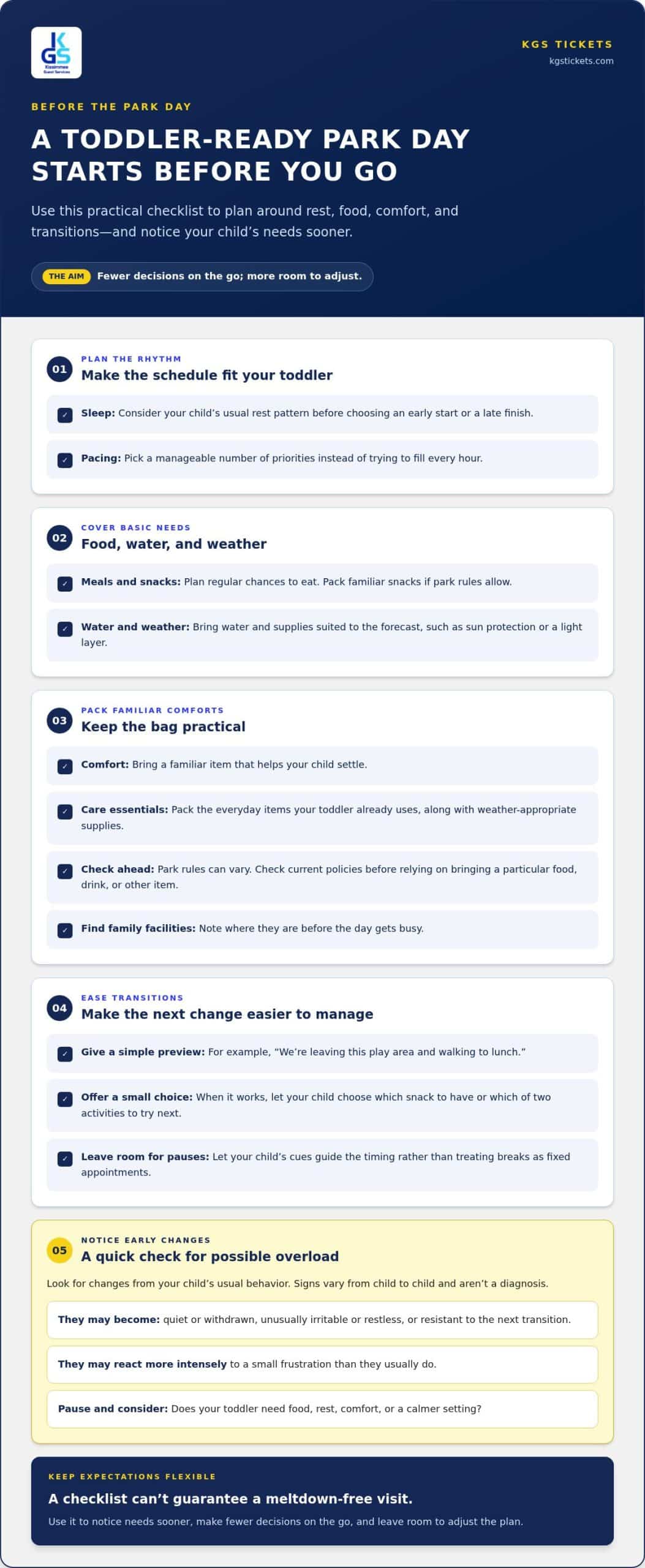
Prevention starts with a day plan that respects your toddler’s basic needs while leaving room for surprises. A checklist can help, but it can’t guarantee a meltdown-free visit. Use it to notice needs sooner and make fewer decisions on the go.
- Sleep: Consider your child’s usual rest pattern before choosing an early start or a late finish.
- Meals and snacks: Plan regular chances to eat, and pack familiar snacks if park rules allow.
- Water and weather: Bring water and supplies suited to the forecast, such as sun protection or a light layer.
- Comfort: Pack familiar items and everyday essentials your toddler already uses.
- Pacing: Pick a manageable number of priorities instead of trying to fill every hour.
What should families pack and plan for a toddler park day?
Keep the bag practical. Include the familiar comfort item that helps your child settle, along with weather-appropriate supplies and their usual care essentials. Park rules can vary, so check current policies before relying on bringing a particular food, drink, or other item. It can also help to note where family facilities are before the day gets busy.
How can you make queues and transitions easier?
Give a simple preview before moving on: “We’re leaving this play area and walking to lunch.” Offer a small choice when it works, such as which snack to have or which of two activities to try next. Plan opportunities to pause, but let your child’s cues guide the timing rather than treating breaks as fixed appointments.
A flexible plan gives families room to respond when a toddler’s needs change. That flexibility is part of how to handle theme park meltdowns with toddlers, not a sign that the day has gone off track. Choose a few must-do experiences and leave breathing room around them.
KGS Tickets offers attraction tickets and personalized assistance to help families plan the attraction side of a visit. Explore attraction tickets and personalized planning assistance as you shape a toddler-friendly day.
How to Reset the Day After a Theme Park Meltdown
Once the hardest moment has passed, you don’t have to decide the rest of the day all at once. Check in with your toddler and notice whether they’re settling, comfortable, and showing signs of having energy for anything else. The original itinerary can wait. Your child’s needs are the better guide.
How do you decide whether to continue or call it a day?
If your toddler is calmer but still tired, try a low-demand activity, such as sitting together in a quieter spot or taking an unhurried walk. If they need longer to rest, pause before choosing what comes next. If distress continues, basic needs remain hard to meet, or your child seems unable to recover enough to enjoy the surroundings, ending the park day may be the kindest option. You’re responding to what’s happening now, not giving up.
There’s no single right choice. Consider your toddler’s comfort and energy, and whether they can settle with support. Don’t measure success by how many attractions you fit in. Knowing how to handle theme park meltdowns with toddlers includes recognizing when a change of plan is the most practical next step.
How can you plan a more flexible next visit?
After the visit, consider what seemed to help and what added pressure. For the next park day, choose a few family priorities, leave open space between activities, and plan around your toddler’s usual rhythms where possible. Park-specific preparation can help you think through distances, attractions, and places to pause, but keep the schedule loose enough to adapt.
A meltdown doesn’t erase the moments your family enjoyed, and changing course isn’t a parenting failure. Some days, a gentle return to the fun works; other days, rest at home is the better ending. If you’re planning another visit, explore theme-park ticket options with KGS Tickets and build a day with room to adjust.
Make Room for a More Flexible Park Day
A toddler’s meltdown can be a sign that the day’s demands have become too much, not a measure of your parenting. Pause, check what your child needs, and lower stimulation before deciding whether to continue, rest, or head out. Planning around sleep, food, weather, and realistic priorities can help, but flexibility matters because even a thoughtful plan may need to change.
That’s the heart of how to handle theme park meltdowns with toddlers: respond calmly, follow your child’s cues, and remember that one hard moment doesn’t have to define the visit. The right next step may be a quieter activity, a longer break, or saving the remaining adventures for another day.
When you’re ready to plan a future visit, explore theme-park ticket options with KGS Tickets. KGS Tickets has served customers since 1997 and is an authorized ticket reseller for major attractions, including Disney and Universal. The company also offers personalized assistance for families planning attraction visits. Keep your expectations gentle, your plans flexible, and make space for the family moments that still bring joy.
Frequently Asked Questions
Is it normal for toddlers to have meltdowns at theme parks?
Yes, toddlers can become distressed in busy, unfamiliar places like theme parks. Crowds, noise, waiting, tiredness, and disrupted routines may contribute, though children respond differently and there may be no single obvious trigger. A meltdown isn’t proof of defiance or poor parenting. Focus on what your child may need in that moment, rather than comparing their response with another child’s.
What should I do first when my toddler has a meltdown at a theme park?
First, stay close and check that your toddler is safe, then consider basic needs such as thirst, hunger, discomfort, or rest. If possible, step away from noise or a crowded walkway and offer calm, brief reassurance instead of a lecture. Learning how to handle theme park meltdowns with toddlers also means pausing to reassess, not forcing the next ride or activity.
Can I prevent toddler meltdowns during a theme-park visit?
Preparation can reduce some common pressures, but it can’t guarantee a meltdown-free day. Aim for realistic pacing, familiar snacks and comfort items, rest opportunities, and supplies suited to the weather. Give your toddler a simple cue before transitions, such as explaining that lunch comes after the ride. Adapt as needed, and check current park guidance about permitted items and family facilities.
Should I leave the theme park if my toddler has a meltdown?
There’s no single right choice for every family. You could pause somewhere calmer, take a longer break, or switch to a quieter activity if your toddler begins to settle. If they remain distressed or need more rest, ending the visit may be the best option. Put safety and your child’s current state ahead of the itinerary. Leaving early isn’t a parenting failure.
How can I tell whether my toddler is tired, overwhelmed, or hungry?
Check when your child last slept and ate, whether they’ve had water, and whether anything feels uncomfortable. Notice the surroundings too: noise, heat, crowds, or waiting may be adding pressure. Signs can overlap, and you may not find one clear cause right away. Offer basic care and reduce demands first. Seek appropriate professional guidance for symptoms that persist or concern you.